Get Full Government Meeting Transcripts, Videos, & Alerts Forever!
Get email alerts on the Infrastructure Sidewalks topic
No spam. Unsubscribe anytime.
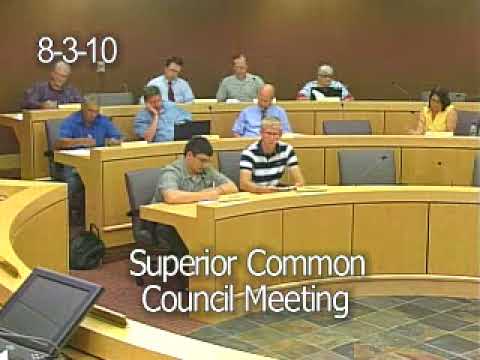
Council adopts revised sidewalk policy changing inspection cycle to seven years
Summary
The Superior City Council approved a revised sidewalk maintenance policy that deletes a five-year inspection requirement and states the city will strive to inspect sidewalks at least once every seven years; councilors asked how residents should report sidewalk problems and were told Public Works is the contact.
The Superior City Council approved a revised sidewalk policy that removes a five-year mandatory inspection cycle and replaces it with a goal that city staff observe all sidewalks firsthand at least once every seven years.
The revision, brought forward by the Human Resources Committee, was described as part of a broader Americans with Disabilities Act (ADA) compliance document. A staff speaker said reductions in staff and budget made the prior five-year inspection cycle difficult to maintain across the city’s 169 miles of sidewalk. Councilors asked whether the change would bring additional state funding; staff replied no additional state funding was expected.
Councilors also sought practical reporting guidance for residents. Staff said Public Works is the department that will mobilize inspections and repairs; the city’s engineer, Brian Olson, is responsible for devising an inspection protocol, and residents were told they may email Jeff Goetzmann to report specific sidewalk concerns. Councilor Hendry moved to approve the revised policy; the motion was seconded by Councilor Olsen and the motion passed.
Why it matters: the change adjusts inspection staffing expectations and clarifies reporting routes for residents while maintaining the city’s ADA-related maintenance obligations. The council’s action was limited to adopting the revised policy; it did not authorize additional funding.