Get Full Government Meeting Transcripts, Videos, & Alerts Forever!
Get email alerts on the Lcad Literacy topic
No spam. Unsubscribe anytime.
LCAP update: Eureka Union targets literacy, Safe Schools Ambassadors and dyslexia screening
Summary
District leaders presented the annual Local Control Accountability Plan highlights, including new staffing for MTSS and a Russian/Ukrainian bilingual aide, planned uses of learning‑recovery funds to support literacy and long‑term English learners, adoption of evidence‑based practices and approval of the UCSF 'Multitudes' dyslexia screener.
Eureka Union School District staff presented the district’s annual Local Control and Accountability Plan (LCAP) update and related academic initiatives during the June meeting, highlighting a renewed focus on literacy, evidence‑based interventions and social‑emotional supports.
Dr. Gina Myers described the LCAP development process and said the district broadened outreach to parents, students and staff through surveys, coffee chats and advisory councils. The presentation outlined three main goals: academic achievement (with emphasis on narrowing gaps and supporting English learners), social‑emotional learning and behavioral supports, and safety/culture/climate.
Literacy and learning recovery: District staff said learning recovery funds will be used to support early reading interventions, sustain professional learning community (PLC) work, maintain the I‑Ready diagnostic tool and pilot a personalized instruction platform tied to diagnostics. “We are proposing using that grant… to really focus on our LTEL, our long term English learners,” the presentation said. Staff emphasized a research‑ and evidence‑based rubric for adopting programs and aligning interventions to the district’s goals.
Science of reading and curriculum: Dr. Myers said the district is moving toward evidence‑aligned literacy instruction, including SOR‑aligned curriculum adoptions such as Reading Wonders and Amplify. Myers described efforts to raise awareness, provide professional development and correct misconceptions about science of reading. “We are doing a lot, and I think it's showing,” she said, pointing to upcoming assessment results.
Social‑emotional and preventative programming: The district will scale the Safe Schools Ambassadors program — a peer‑based, evidence‑informed preventive approach for promoting pro‑social behavior — and maintain site counseling, library/lunch programming and other SEL supports funded through supplemental and other grants.
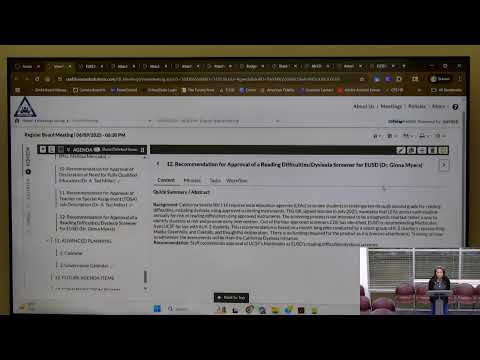
Dyslexia screening adoption: In a separate agenda item later in the meeting the board approved UCSF’s Multitudes dyslexia screener for K–2 screening, a state‑supported tool that staff said comes at no cost for the tool itself; training and assessment support will be funded from grants. Dr. Myers said the screening aligns with state directives to identify reading difficulties early and provide timely interventions.
Why it matters: The LCAP sets the district’s priorities for targeted funding and programs for unduplicated students. The emphasis on evidence‑based literacy practices and early screening is intended to accelerate reading progress and reduce long‑term learning needs.
Ending: Staff will present more detail on learning recovery uses, specific intervention purchases and training timelines in upcoming reports; trustees thanked staff for broad stakeholder engagement in the LCAP process.