Get Full Government Meeting Transcripts, Videos, & Alerts Forever!
Get email alerts on the Municipal Finance topic
No spam. Unsubscribe anytime.
Tuscaloosa officials weigh taxable bonds, call provisions to finance Savings Center
Summary
City finance staff, the mayor and bond advisors discussed structuring roughly $66 million in bond borrowing for the Savings Center, focusing on taxable issuance, call dates, and the use of donated and state funds to reduce borrowing costs and risk.
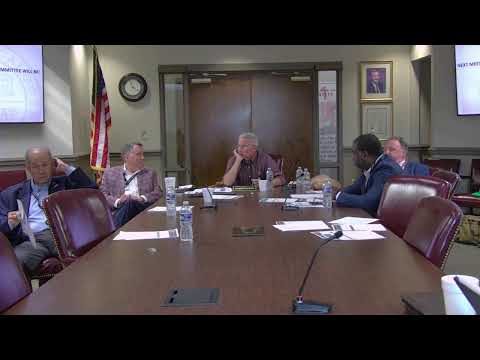
Tuscaloosa Finance Committee members and city financial staff on Wednesday discussed how to structure an expected roughly $66 million bond issue to finance the Savings Center, weighing taxable issuance, call provisions and holding donated and state funds in interest-bearing accounts to offset debt service.
The discussion centered on limiting upfront borrowing while preserving flexibility. Chair Busby opened the conversation by summarizing the problem: the city must borrow the full contract amount up front but expects roughly $32 million in donations and state funds to arrive over several years.
Barry (staff member) and Lee (staff member), who assisted the committee’s analysis, outlined trade-offs among front-loaded maturities, shorter call dates and taxable issuance. "If you front load the maturities in the 5 to 10 years and use some of the donation money … you could pay the debt down faster," Barry said, but he warned rating agencies and markets could view that as risky if pledged receipts lag. He told the committee a shorter call date would raise interest rates, roughly by 50 basis points in the firm’s model, because investors receive less protection when the issuer can refinance earlier.
Committee members and staff also discussed holding donations and state money in CDs or other interest-bearing securities and using the interest income to offset debt service rather than paying higher rates for shorter calls. "We can run you an analysis on how much interest income you'll make … and then compare that to the interest expense," Barry said. Carly Standridge (city staff) said the treasury management division had recently had two sizable CDs mature and could lock in current rates to stabilize cash flows for at least 12 months.
Participants noted statutory and tax constraints. The committee heard that a 10‑year call provision is statutory for the warrants in question, limiting how much the city can shorten investor protection without market cost. Staff said issuing taxable debt removes federal tax-code limitations tied to tax-exempt borrowing and allows broader future use of proceeds, subject to state law (cited in discussion as "amendment 7 72"). The group also discussed that taxable issuance removes IRS arbitrage restrictions and can allow the city to keep interest earned on the bond fund.
No formal vote was taken; the session was a policy-level discussion ahead of execution. Committee members asked staff to produce a conservative estimate of expected interest earnings on current investments and pledged donations, and to compare those earnings to projected interest expense under alternative bond structures. Committee members said they wanted that numeric comparison before authorizing the issuance.
The mayor and multiple committee members praised the due diligence. "We don't want to borrow money that we don't need," the mayor said, urging careful balancing of flexibility and risk. Staff agreed to prepare a construction draw schedule and a short analysis comparing interest income on held funds with interest expense on bond alternatives for the committee’s next review.
The committee did not set a timeline for a bond sale during the discussion and reserved final decisions for a later meeting when the detailed comparative analysis is ready.