Get Full Government Meeting Transcripts, Videos, & Alerts Forever!
Get email alerts on the Impact Fees Deannexation topic
No spam. Unsubscribe anytime.
Ector County seeks impact‑fee waivers and deannexation for major county projects; Odessa city staff to craft agreement
Summary
Ector County officials asked the City of Odessa to exempt county projects from impact fees, avoid city permitting by deannexing county properties, and permit county projects to pay city utility rates; city and county attorneys will draft an interlocal or memorandum of understanding for council review.
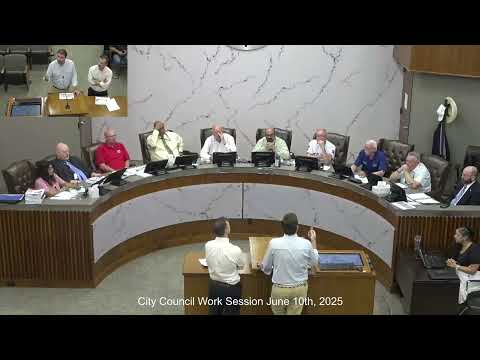
Ector County officials told the Odessa City Council on June 10 they want an agreement that would spare county projects from city impact fees and remove city annexation requirements for several large county developments, including a new courthouse, library and parking garage.
An Ector County representative said the county has roughly $250 million in courthouse work and about $60 million planned for a library, plus a parking garage, juvenile detention facility and other projects. The representative asked the city to either amend the impact‑fee ordinance or enter an interlocal agreement to exempt county public projects from impact fees and to accept county projects under city service terms without subjecting them to duplicative permits or higher out‑of‑city utility rates.
Why it matters: County officials argued the projects are public infrastructure and that requiring both county and city approvals or charging impact fees intended to fund city growth would be duplicative and counterproductive for public projects paid by taxpayers.
What was discussed
Dan (city attorney) confirmed the city can charge impact fees to county projects under current law but noted the ordinance already contains exceptions for certain uses such as low‑income housing and public schools. He said amending the ordinance to add county public projects as an exception would be “the clean way to do it.”
County leaders proposed three avenues: amend the city’s impact‑fee ordinance to exempt specified county projects; execute an interlocal agreement that would supersede city ordinances for the covered projects; or deannex (DNX) county properties so the county would not require city permits but would continue to receive city services by agreement. County officials preferred deannexation plus an interlocal for services as the broadest solution to avoid repeating permit reviews for many projects.
City staff cautioned about precedent and legal risk
Several council members expressed concern about precedent. One councilmember said waiving impact fees broadly could invite future requests from private developers or other entities seeking waivers. City manager David (surname not specified) and other staff urged caution about a blanket DNX approach, noting it could prompt other governments or entities to seek similar treatment.
City and county attorneys agreed to collaborate on a limited, project‑specific interlocal or memorandum that addresses the county’s immediate needs — for example, a small expansion to the county morgue, restrooms at a cemetery, or the juvenile facility — rather than a blanket policy change. County and city attorneys were asked to produce a draft agreement for council consideration at the next meeting.
Quotes from the meeting
“We sent over a draft memorandum of understanding in a local agreement between Ector County and the city of Odessa that really asked for three things,” an Ector County representative said, summarizing the county’s request.
“First off, the city can charge a county impact fees. We we can do that,” Dan said, then recommended amending the ordinance to create a specific exception for county public projects.
Next steps and actions
City staff and county counsel were directed to draft an interlocal or memorandum that would address permitting, impact fees and service arrangements for particular county projects and to return to the council for review. Staff also agreed to prioritize any time‑sensitive project requests (the county cited small, immediate needs such as a 20‑foot slab addition at the morgue and two restrooms at a cemetery) and to explore expedited permitting options.
Context and constraints
Speakers noted legal and operational constraints: interlocal agreements can supersede local ordinances and are often used to formalize shared services, but DNX (deannexation) is an unusual step that city staff said could create other demands or precedent. Joe Tucker, the city engineer, and other staff flagged site‑specific issues such as easement abandonments and environmental or title considerations for downtown redevelopment ties related to county projects.
Ending
Council members said they supported working with the county to minimize delays to critical public projects but asked city and county attorneys to draft a narrowly tailored agreement rather than immediately adopt a broad deannexation or wholesale ordinance waiver. The council asked staff to return with a draft agreement at the next meeting for formal consideration.