Get AI Briefings, Transcripts & Alerts on Local & National Government Meetings — Forever.
Odessa receives unmodified audit opinion despite internal‑control weakness tied to finance turnover
Loading...
Summary
City auditors gave Odessa an unmodified (clean) opinion on its FY2023 financial statements but reported a material weakness in internal controls tied to turnover in the finance department; auditors and staff described corrective steps and a plan to accelerate the next audit cycle.
City auditors presented the Odessa City Council with an unmodified opinion on the city’s fiscal year 2023 financial statements while identifying a material weakness in internal controls that flowed from significant turnover in the finance department.
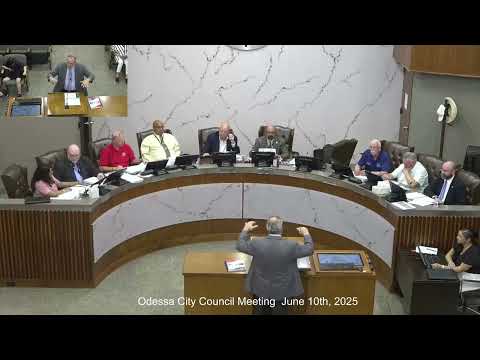
The finding came during a June 10 presentation by a finance staff member identified in the meeting as Kayla and by Greg Peterson, audit partner with Weaver and Associates. Kayla told the council that the weakness “stemmed from errors that were not detected prior to the audit and were primarily the result of significant turnover within the finance department during the fiscal year 23 year end close and audit period.”
Greg Peterson said the audit was conducted in accordance with governmental auditing standards and that the auditors rendered an unmodified opinion, the highest level of assurance. “We were given an unmodified opinion,” Peterson said, adding that the material weakness related to internal controls did not produce qualifications to the financial statements.
Why it matters: an unmodified opinion means the city’s financial statements can be relied upon by users, including bond markets and federal oversight, but the reported internal‑control weakness can affect the timeliness and accuracy of future closes and may influence credit reviews until corrected.
Key figures and findings: Peterson summarized the city’s consolidated position and operating results during his presentation, saying the city’s ending net position was $565,000,000 and that roughly $149,000,000 of that was unrestricted and available for operations. He also reported a year‑over‑year increase in net position of about $57 million and that sales tax and investment earnings were primary revenue drivers for the year. The auditors performed required single‑audit procedures for federal programs and issued an unmodified opinion for those as well.
Corrective actions and timing: both city staff and the auditors described a corrective action plan focused on training, reconciliations, checklists and rebuilding institutional knowledge. Peterson said the department experienced “almost 200 percent turnover” during the period under audit and that the corrective action plan is “quite robust.” Council members expressed support for accelerating work on the next audit; Peterson and staff said they planned to begin earlier testing work as soon as July to shorten the close and audit timeline.
Council action and next steps: Council voted unanimously to accept the audit. During the meeting council members and auditors discussed efforts to regain the city’s prior bond rating and to begin parts of the next audit earlier so the FY2024 report can be completed sooner.
The auditors identified no reportable noncompliance with federal uniform guidance for tested programs (including the federal transit cluster and ARPA funds) and indicated no questioned costs for those programs.