Get Full Government Meeting Transcripts, Videos, & Alerts Forever!
Get email alerts on the Judicial Appeals Oral Argument topic
No spam. Unsubscribe anytime.
Appeals court hears dispute over enforcement of New York default judgment in Group Management 2 LLC v. Young
Summary
At oral argument in case No. 231342, attorneys debated whether a New York default judgment and $43,000 award plus fees should be enforced in Massachusetts and whether the defendant can relitigate underlying issues; justices asked about service, motions to vacate and anti‑SLAPP claims. The case was submitted to the court.
An appeals‑court panel heard oral argument in case No. 231342, Group Management 2 LLC v. Young, over whether a default judgment entered in New York should be enforced in Massachusetts and to what extent its underlying issues may be relitigated.
Justice Rubin presided and introduced the matter, saying, "We will hear number 231342, Group Management 2 LLC versus Young." The argument focused on competing legal principles: full faith and credit for out‑of‑state judgments versus limits on preclusion when the original judgment resulted from a default.
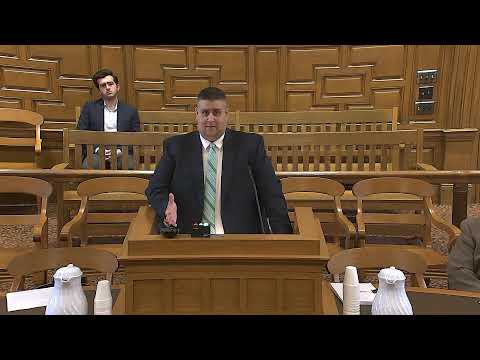
The plaintiff's attorney, Stephen Garabedian, representing Group Management 2 LLC (GM 2), told the court the case is primarily a collection action. "It's about money. It's about the collecting of money," Garabedian said, arguing that the New York default judgment should be enforced in Massachusetts because the defendant had opportunities in New York and did not obtain relief there. Garabedian pointed to the record appendix (identified in argument as pages 37–53) and said the summary judgment record includes service attempts and proof of notices; he told the panel the record shows four registered notices related to service and entry of default and that receipts and tracking information support those filings (the underlying receipts were described as not included in the appendix submitted to the appeals court).
Counsel identified the damages figure in the New York judgment as roughly $43,000 plus attorneys' fees. Garabedian said some of that amount stemmed from earlier proceedings with the Massachusetts attorney general and enforcement of sanctions and restitution, and he argued that jurisdictional and procedural defenses were available and not successfully pursued in New York.
By contrast, the attorney identified in the transcript as Regan argued Mr. Young should be allowed to relitigate underlying elements because the New York judgment was entered by default and the underlying issues were not litigated on the merits. Regan told the court the motion to vacate the New York default had been filed and denied and urged the panel to treat the New York default differently than a judgment decided on the merits, citing case law the attorney identified in argument (referred to in the transcript as Triglier/Triglia and Roxas v. Romanoff) and urging the court to review anti‑SLAPP and other defenses de novo in light of the record.
Justices questioned both counsel about specifics the panel said mattered for the legal analysis: whether the New York motion to vacate raised jurisdictional defects or adequacy of service; whether the $43,000 damages figure included restitution ordered by the Massachusetts attorney general; whether GM 2 has other clients beyond the entity identified as IPA; and whether Massachusetts law would treat a judgment based on a default differently when the Full Faith and Credit Clause applies. The transcript records the court asking about the substance of the New York proceedings, the basis for the motion to vacate, and whether the defendant had the chance to appear and litigate in New York.
Both attorneys acknowledged a related Norfolk County declaratory judgment action exists and, as counsel stated on the record, that matter is in abeyance pending the outcome of this appeal. Regan emphasized the presence of anti‑SLAPP assertions in the pleadings and argued the two lawsuits at issue should be treated as "of a piece," while Garabedian replied that the action before the appeals court is a straight enforcement/collection action and that anti‑SLAPP relief was not a proper basis to escape enforcement of a foreign money judgment that was not disturbed on motion in New York.
The justices also asked whether a contract that might be void under Massachusetts law would alter the Full Faith and Credit analysis; counsel disagreed on whether that question would change the enforcement outcome and whether such defenses were waived by failing to press them in the New York proceedings.
After questioning, the panel thanked counsel and indicated the case was submitted for decision.
The appeals court record and the appendix pages cited during argument will supply the documentary record the justices will consider in resolving whether the New York default judgment is enforceable in Massachusetts and whether Mr. Young may press the defenses he raised in the Massachusetts litigation.