Get Full Government Meeting Transcripts, Videos, & Alerts Forever!
Get email alerts on the Judicial Appeal topic
No spam. Unsubscribe anytime.
Appeals court hears challenge to Narcan-based evidence and RMV notices in Randy White convictions
Summary
At oral argument June 11, 2025, the Massachusetts Appeals Court heard challenges to the admission of lieutenant testimony about a Narcan response and to Registry of Motor Vehicles mailing certifications used to prove a suspended license in the case of Commonwealth v. Randy White.
Boston — The Massachusetts Appeals Court on June 11, 2025 considered whether testimony by Lynn Fire Department Lieutenant Matthew Reddy that Randy White responded to Narcan was improperly admitted and whether Registry of Motor Vehicles (RMV) mailing and certification records properly proved a prior license suspension.
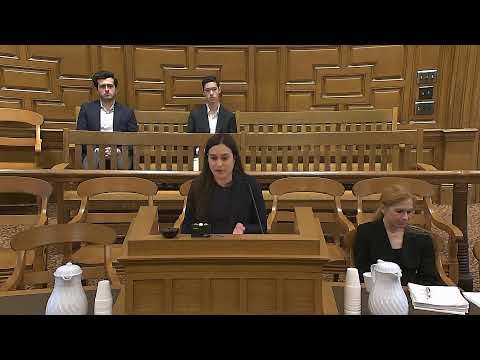
The three-judge panel — Judge Massing, Justice Justin Henry and Justice Hodgins — heard argument from appellant counsel Susan Ennis and from Emily Mello for the commonwealth in Commonwealth v. Randy White, No. 21-P-801. White was convicted after a jury-waived trial of operating under the influence of drugs and operating on a suspended license.
Ennis told the court that the Commonwealth failed to give adequate notice that it would present lieutenant Reddy as an expert and that Reddy went beyond his qualifications when he testified that White was "under the influence of an opiate," excluded other medical causes, and speculated about fentanyl. Ennis argued the trial record lacked corroborating indicia common to other cases (such as admissions or paraphernalia) and said the Narcan response was the Commonwealth's primary evidence of opiate intoxication. "He testified that he was under the influence of an opiate," Ennis said, and she argued that Reddy had "insufficient education, training, or experience" to make causal medical conclusions about the Narcan response.
The panel questioned preservation of objections. Judge Massing and Justice Henry noted defense counsel did not raise the notice issue until the reply brief; Ennis acknowledged the timing but maintained the issue was important and preserved in the trial record. The justices also explored whether Reddy testified as a recipient witness, an expert, or both; Ennis said he had testified in both capacities and that certain opinions were unqualified and prejudicial.
Mello defended admission of the testimony, saying Reddy "was testifying as both" a respondent who administered Narcan and a witness with long field experience responding to opioid overdoses and that the judge at trial — because the case was jury-waived — could separate permissible observational testimony from any improper opinion. Mello noted that Reddy and EMS records showed a delayed but ultimately positive response to multiple Narcan doses; counsel said the record reflected that medics administered several doses and that the defendant was revived.
On the suspended-license count, Ennis challenged portions of the RMV record as testimonial hearsay, pointing to the RMV certification language stating there had been "no reinstatement" of the license. The parties debated whether that attestation and a certificate of mailing were testimonial and whether they were necessary to sustain the conviction. Mello cited Parenteau, McEvoy and Royal (as referenced in the record) to argue the RMV certification was sufficient; she also said the trial judge declined to consider post-offense attestation language as operative legal proof in the bench trial.
The panel asked whether objections to expert foundation were made at trial; Mello said the standard of review would be abuse of discretion and that notice was preserved. The record also contains a colloquy form related to the subsequent-offense waiver portion of the trial that the judge found had been signed by the defendant and counsel; counsel pointed the court to the supplemental record appendix for that document.
No decision was announced at argument. The panel recessed at the close of oral argument; the court will issue a written opinion resolving the sufficiency, expert-testimony and RMV-record questions.
Ending — The court heard roughly one hour of argument on the single case and recessed after counsel concluded. A written decision from the Appeals Court will be filed later and is not in the transcript.