Get Full Government Meeting Transcripts, Videos, & Alerts Forever!
Get email alerts on the Budget And Finance topic
No spam. Unsubscribe anytime.
HEB ISD projects multi‑million dollar shortfall, board reviews options including local tax pennies
Summary
District leaders told the board they expect a budget gap driven by declining enrollment and rising costs; trustees reviewed current-year finances, the preliminary 2025–26 forecast under HB 2, and local tax options (the so‑called "golden pennies") to close the gap.
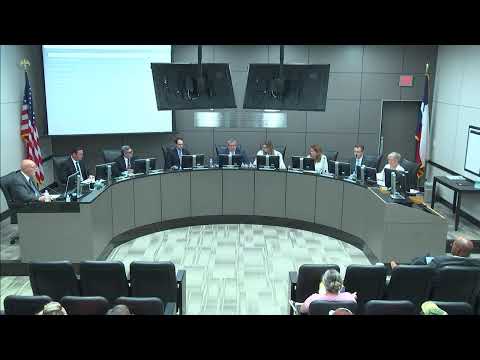
Board members heard a budget workshop outlining current finances and possible steps to close a projected shortfall for 2025–26.
At the meeting, budget presenter Mister Jones said the district currently estimates revenue of $221,000,000 and expenditures of $239,000,000 for the fiscal year, leaving an estimated $18,000,000 decrease to fund balance. "Right now, we're looking at estimated revenue of $221,000,000, estimated expenditures of $239,000,000," Jones said. He told trustees the district came in about $7,100,000 better than expected last year and has set aside locally defined capital funds, but that the set‑aside balance is being drawn down.
The presentation placed key context in the state legislative changes known as HB 2. Jones described a district estimate that HB 2 would add roughly $12,100,000 in revenue while mandatory teacher raises under HB 2 would cost about $6,800,000; benefits for those raises were not covered and were estimated at roughly $700,000. "About $12,100,000 would be gained from that," Jones said. He explained those net changes still leave the district drawing on its locally defined capital set‑aside and forecast declining enrollment over coming years.
Why it matters: trustees were presented with both short‑term funding pressure and a longer‑term enrollment decline that, without further revenue or legislative relief, would push the district into multi‑year deficits. The presentation also laid out choices the board could ask voters to make locally.
Details and options: the district reported current enrollment at 23,262 and said it is budgeting for a loss of about 100 students next year. Jones described local tax options (the district's value‑added tax rate election or VATRE) commonly called "golden pennies": "If we'd go for that, we'd get a local gain of about $2,000,000 per penny," he said, adding the state would contribute roughly $1,700,000 per penny for a combined $3,700,000 per penny. He said the district could consider up to three "golden pennies" (about $11,100,000 total from local+state), or a larger local increase that would run into recapture and yield smaller per‑penny net gains.
Trustee questions and next steps: board members asked whether the district could commit to raises now; staff said reliable modeling is still pending. A staff presenter said mandatory raises specified in HB 2 do not cover all staff groups and that several employee groups — administrators, librarians, counselors and nurses, and teachers in their first three years — were not fully funded by the state provision. The superintendent and finance staff said they would return with tighter modeling before the board votes on any compensation package or tax measures.
Formal actions tied to finances: the board approved several routine financial items during the same meeting — the April 2025 financial statements and a budget transfer and amendment that moved $150,000 from an extended day program account into summer‑school funding. The board also approved the selection of Weaver and Tidwell LLC to conduct an efficiency audit and approved a three‑year agreement with the Tarrant County tax assessor‑collector for collection services (the per‑account fee rising in the new term).