Get Full Government Meeting Transcripts, Videos, & Alerts Forever!
Get email alerts on the Public Safety Emergency Medical topic
No spam. Unsubscribe anytime.
Monte Vista council approves six-month pilot for police tactical emergency medical service
Summary
The Monte Vista City Council voted to approve a six-month pilot allowing EMT‑certified police officers to provide advanced medical care in hazardous or high‑casualty incidents. The pilot is funded initially by the Loar Foundation and will be evaluated at the end of the calendar year.
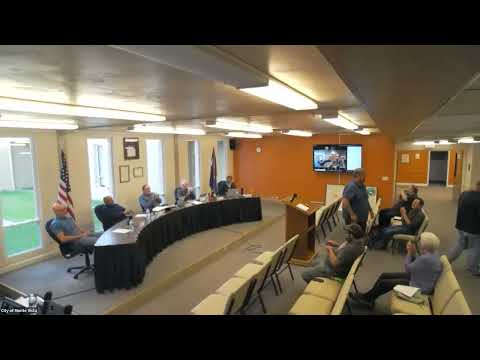
Monte Vista — The City Council voted to approve a six-month pilot program that will let certified emergency medical technicians who are also Monte Vista police officers provide advanced medical care during critical incidents while waiting for ambulance crews.
Corporal Josh Hill, a police officer and certified EMT, told the council the tactical emergency medical service and rapid response team (TEMS) would let officers give early advanced care in situations such as overdoses, heart attacks, respiratory failure, traumatic injuries and active‑shooter events. "Members of the police department who are EMT certified would be able to provide that advanced level of care as members of the police department while waiting for EMS to arrive," Hill said during his presentation.
Hill said the TEMS team would consist of four members, named a medical director and operate as a pilot funded initially by the Loar Foundation for about six months. He said continuing funding would rely on donations and grants. Hill estimated the ongoing operating cost at approximately $8,000 annually for items including insurance and the medical director’s salary.
Dr. Hurley, introduced by Hill as the proposed medical director for the program and currently serving as a director for the local ambulance service, spoke briefly in support of the presentation. Sergeant Anthony Chacon also submitted a written statement in support, which Hill read to the council. The packet to council included a proposed contract for a medical director and letters of support from local EMS personnel.
Council members questioned program details before the vote. Councilor Howard asked whether the pilot is funded for six months; Hill confirmed that timeline, and that after the pilot the city would evaluate continued funding. Hill said the ambulance service has agreed to provide equipment, training and supplies for the team during the pilot. When Councilor Watson asked about body‑worn cameras during medical incidents, Hill responded, "Yes. As per state law, even during medical incidents, the body cams will remain active the entire time."
Hill emphasized officer and community safety as the program priority, and said TEMS members would not change existing police staffing or schedules.
Motion and vote: A motion to approve the pilot program to establish the tactical emergency medical service agreement was moved and seconded. Roll call votes recorded in the transcript show Councilor Howard, Councilor Lorenz, Councilor Watson, Mayor Pro Tem Secola and Mayor Becker voting in favor; the motion carried.
Nut graf: Proponents describe TEMS as a force multiplier designed to provide time‑critical interventions in hazardous or high‑casualty events and to shorten treatment gaps where volunteer ambulance response times can be lengthy. The council authorized a pilot that the presenters said will be reassessed at the pilot’s end and could transition to other funding if the program continues.
Discussion and next steps: Hill said the pilot will run through the end of the calendar year with reevaluation before then. He said the Loar Foundation provided start‑up funding and that the ambulance service will furnish supplies and training. Hill added that some officers do not support the program, which is one reason he framed it as a pilot. Council discussion noted that if the city decides to continue the program after the pilot it would need to identify longer‑term funding and integrate any supplies and training into city budgets or grant programs.