Get Full Government Meeting Transcripts, Videos, & Alerts Forever!
Get email alerts on the Housing Middle Housing topic
No spam. Unsubscribe anytime.
Neighbors press city on SE Harrison middle-housing project as state law constrains local review
Summary
Residents and city staff debated a middle‑housing development on Southeast Harrison after the city explained state rules that allow up to quadplexes by right and tightly limit the city's ability to block land divisions that would let units be sold individually.
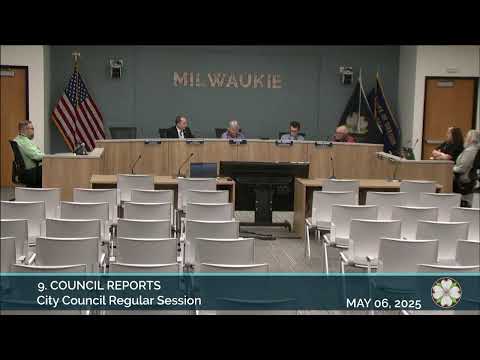
City staff and neighbors clashed over a Southeast Harrison development this week as residents said the project and its construction have outpaced public notice, while staff said state laws require cities to allow middle housing and limit the grounds for local denial.
The dispute centers on two quadplexes under construction on lots created by a 2022 subdivision. Residents told the council the development is straining narrow streets, parking and sidewalks and raised safety concerns about a connector street the developer built. "My problem is not with middle housing. I think that it's a great tool to bring housing prices down," resident Cameron McKillop told the council, but added the neighborhood’s infrastructure and narrow one‑way connector were not built to support multiple additional units.
City planning staff explained why the city approved the recent applications and what it cannot legally deny. "The city adopted a comprehensive plan in 2020 ... shortly before that, the state also passed House Bill 2001, which requires cities to allow middle housing types on lots zoned for residential development that allows single detached units," staff said during the meeting. Staff said Milwaukie adopted a middle‑housing code in spring 2022; that code allows up to a four‑unit structure on an RMD lot outright. The city told neighbors that follow‑up filings now before the state and the city — a middle‑housing land division that would let owners sell the individual units — must be approved unless the narrow statutory appeal grounds apply.
Neighbors pressed staff on site design questions and on specific elements such as a schematic bollard that had appeared in early subdivision drawings but was never required. "There was a bollard discussed during those conversations ... That bollard was never included as a condition of approval, and that's why you don't see it today," a planning staff member said, but staff also offered to work with the developer and neighbors on possible traffic‑calming or bollard options.
Residents described construction impacts at the site: parked contractor vehicles, debris and exposed trenches. Steve Tallman, a nearby homeowner, asked whether the developer had a sidewalk closure or construction‑safety permit. "There's trenching going on ... with no barriers whatsoever. I think that's a danger," he said.
Staff also addressed questions about contractor licensing and inspections. Building staff noted that contractor license records come from the Oregon Construction Contractors Board and that the city must accept active licenses: "The building division must issue permits to contractors with an active license status regardless of infractions," staff said.
City staff recognized neighbors' anxieties and promised more outreach. They said they will schedule a broader public session about middle housing laws, explain what the city can and cannot do under state law, and follow up on outstanding enforcement items such as arborvitae removal and erosion control citations.
The exchange underlined a recurring local tension: residents expect notice and community input on neighborhood changes, while state housing mandates shorten local discretion over what may be built on many residential lots. Neighbors asked for more engineering reviews of parking and sidewalks and for the city to explore short‑term fixes, such as bollards or curb delineation, that could reduce safety risks while the development proceeds.
City staff encouraged neighbors to report code violations (illegal parking, erosion control problems) to nonemergency lines and to the dedicated email for erosion control so enforcement staff can respond. They also said they would prepare additional written responses to questions raised in the meeting's public comment and would convene a separate public meeting on middle housing for broader education and discussion.