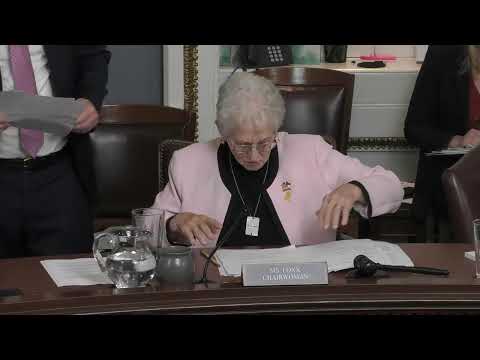
Rules Committee approves closed rule to bring four measures on D.C. governance, policing, immigration and fentanyl to the floor
Get AI-powered insights, summaries, and transcripts
SubscribeSummary
The House Committee on Rules approved a closed rule Friday to bring four measures to the House floor — targeting noncitizen local voting in Washington, D.C., local cooperation with federal immigration authorities, Metropolitan Police Department disciplinary reforms, and a national fentanyl bill — after partisan debate over home rule, public-safety funding and immigration enforcement.
The House Committee on Rules approved a closed rule Friday to bring four measures to the House floor for consideration, despite objections from Democrats who said the bills intrude on District of Columbia self-government and withhold funding needed for public safety.
The rule, moved by Rep. Houchin and agreed to by the committee, clears HR 884 (prohibiting noncitizen voting in D.C. local elections), HR 2056 (the District of Columbia Federal Immigration Compliance Act of 2025), HR 2096 (the Protecting Our Nation’s Capital Emergency Act, addressing Metropolitan Police Department disciplinary rules), and S.331 (the HALT Fentanyl Act) for floor consideration under closed rules. The motion to report the rule passed on a recorded vote, 7 yeas to 3 nays.
Why it matters: The package would reverse recent D.C. local laws on voting, policing and cooperation with federal immigration authorities and sends a high-profile drug-control bill to the House floor. The measures drew large, partisan debate in the Rules Committee over Congress’s authority over the District, public-safety funding, and the effect of federal immigration enforcement on immigrant communities.
Committee debate and testimony
The hearing opened with the committee chair — identified in the transcript as the Rules Committee chair — describing recent protests in Los Angeles and saying, “We are a nation of laws. If you come into our nation illegally, you’re breaking the law.” That framing prefaced the panel and set the tone for several members who tied the D.C. bills to broader immigration and public-safety arguments.
Rep. James Comer, chairman of the House Committee on Oversight and Reform, said the measures are “necessary” to make D.C. an ally with federal immigration enforcement and to restore protections for police officers. “This bill is a necessary step in ensuring our nation's capital is an ally, not an opponent in the fight to end this crisis,” Comer said in his five-minute summary to the Rules Committee.
Acting Oversight ranking member Rep. Lynch urged deference to D.C. local governance and argued that the bills “contravene the purposes of the Home Rule Act,” which grants the district powers of local self-government. Lynch told the committee he “strongly oppose[d] these 3 bills, which would repeal or nullify laws, policies, or practices duly enacted by the District Of Columbia because I support local self government for DC.”
Rep. James McGovern, ranking member of the Rules Committee, criticized the package as “more power grabs” and said Republicans were using D.C. to wage “culture wars” while cutting funds he said are needed for public safety and social services. McGovern urged protecting victims and witnesses in immigration-related policy, arguing changes could discourage cooperation with police.
Amendments and procedural votes
During consideration of the rule, Rep. McGovern offered an amendment to remove an auto-executing manager’s amendment to HR 2056 that he said could require the District to turn over undocumented people who are victims or witnesses of crimes. McGovern argued the change would “discourage the victims of crimes like sexual assault or robbery from coming forward.” The committee rejected McGovern’s amendment on a roll call (clerk tally reported 3 ayes, 6 nays).
Rep. Scanlon offered an amendment to the rule to add immediate floor consideration of S.1077, the District of Columbia Local Funds Act (a bill intended to restore more than $1 billion in local D.C. funding she said was omitted from a continuing resolution). That amendment was also rejected by the committee (clerk tally reported 3 ayes, 7 nays).
The full rules motion offered by Rep. Houchin was then agreed to on a recorded vote, 7 yeas to 3 nays; the committee designated Rep. Houchin to manage the rule for the majority and Rep. McGovern for the minority.
Bills subject to the rule (Votes at a glance)
- HR 884 — Prohibits individuals who are not U.S. citizens from voting in District of Columbia local elections and repeals the Local Resident Voting Rights Amendment Act of 2022. Status under rule: advanced for floor consideration under a closed rule. Discussion in committee: supporters said only citizens should vote in local elections; opponents cited D.C. home-rule authority. (Referenced in transcript by Chairman Comer and others.)
- HR 2056 — District of Columbia Federal Immigration Compliance Act of 2025. Status under rule: advanced for floor consideration under a closed rule. Summary per proponents in committee: would require the District to comply with federal immigration laws and honor detainers from federal immigration authorities. Opponents said the provision risks undermining trust between immigrant communities and local police. A manager’s amendment tied to this bill prompted the McGovern amendment attempt. (Referenced by Comer, McGovern.)
- HR 2096 — Protecting Our Nation’s Capital Emergency Act. Status under rule: advanced for floor consideration under a closed rule. Summary per proponents: would restore collective-bargaining rights for Metropolitan Police Department officers on disciplinary matters and reinstate a statute of limitations for disciplinary investigations. Opponents said the bill would undo recent D.C. police-discipline reforms and harm accountability. (Referenced by Comer, Lynch, Mayor Bowser’s letter entered into the record opposing the bill.)
- S.331 — HALT Fentanyl Act. Status under rule: advanced for floor consideration under a closed rule. Committee discussion noted bipartisan concern about fentanyl and that the House previously passed related measures; sponsors said they expect to send a final bill to the White House. (Referenced by the chair and members.)
What the votes do not decide
These committee votes only govern how the House will consider the listed measures on the floor. None of the four bills were passed by the full House during this proceeding; final passage would require floor debate and a separate vote. The committee’s action also left in place an auto-executing manager’s amendment tied to HR 2056 after Mr. McGovern’s attempt to remove it failed.
Context and follow-up
Members repeatedly raised the question of funding: Democrats said Congress had withheld roughly $1 billion in local D.C. funding earlier in the year and urged passage of a Senate bill to restore local funds, while multiple Republicans tied the D.C. measures to broader immigration and public-safety priorities. The hearing record includes a letter from D.C. Mayor Muriel Bowser opposing HR 2096 and a Department of Justice press release submitted by unanimous consent noting that violent crime in D.C. reached a 30-year low.
The Rules Committee will reconvene according to the chair’s schedule to complete further business; the rule sets closed procedures and time limitations for floor consideration of each bill.