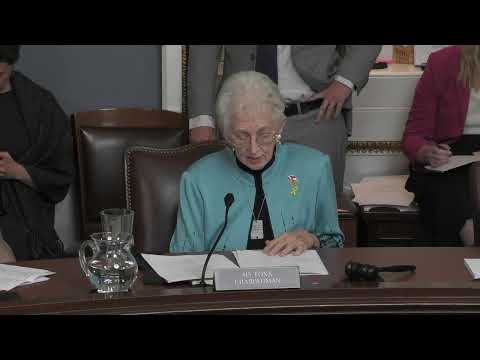
Committee hearing exposes partisan split over HR4 cuts to PEPFAR, USAID and public broadcasting
Loading...
Summary
Committee testimony and member questioning focused on rescissions to foreign assistance and public broadcasting — including a proposed $400 million cut to PEPFAR and $1.1 billion to the Corporation for Public Broadcasting — with Democrats warning of global health and humanitarian consequences and Republicans arguing the cuts target wasteful or mission-drift spending.
The transcript of the House Rules Committee hearing on HR 4 shows a sharp partisan debate over proposed rescissions that would remove roughly $9.4 billion in budget authority, with a concentrated focus on international health assistance and public broadcasting.
Republican witnesses and members repeatedly described the package as targeting wasteful spending in foreign assistance and domestic public broadcasting. Representative Aderholt told the committee the package "would rescind budget authority for 9,400,000,000.0, including funding for United Nations, climate change programs, refugee assistance, economic and development assistance, and corporation for public broadcasting." He characterized the plan as "an important step toward greater fiscal responsibility."
Democrats warned of immediate human costs if the rescissions are enacted. Ranking Member DeLauro said the package "cuts $400,000,000 from PEPFAR, a paragon of American leadership that has saved 26,000,000 lives," and she and other Democrats cited academic tracking they said attributes thousands of deaths to earlier funding suspensions, giving specific numbers in committee testimony: "over 106,000 adults and over 200,000 children have already died due to the illegal termination of these programs," and, regarding HIV specifically, "more than 50,000 adults and 6,000 infants"—figures the witness and members discussed during questioning.
Substantive details and examples
- Total rescission figure: committee and witnesses repeatedly cited $9.4 billion in rescinded budget authority. - PEPFAR: committee testimony and member amendments identified a proposed rescission of approximately $400 million to PEPFAR funding; Democrats warned this would jeopardize treatment and prevention gains. - Corporation for Public Broadcasting: committee discussion referenced a $1.1 billion rescission affecting NPR/PBS funding; proponents of restoration said federal dollars fund local public radio and television stations and emergency alerts. - USAID and global health: witnesses argued some funds targeted by the rescission relate to maternal and child health, water and sanitation, and humanitarian assistance; critics said reductions would worsen famine risk, refugee support, and pandemic preparedness.
Arguments made
Republican arguments (representative points from transcript): - The rescissions remove discretionary programs the majority views as non-core, duplicative, or devoted to diversity/equity initiatives not tied to core mission. - Representative Aderholt and others said many items are small line items that can be rescinded while protecting core life-saving treatment.
Democratic arguments (representative points from transcript): - Democrats, including Ranking Member McGovern and Rep. DeLauro, argued the rescissions would force life-threatening interruptions to vaccine, HIV treatment and other global-health programs, and erode U.S. diplomatic standing. - Members cited research (Boston University School of Public Health and other sources referenced in committee testimony) alleging excess deaths attributable to earlier funding disruptions.
Votes on restoration attempts
Committee members offered multiple amendments to restore funding for specific accounts (PEPFAR, CPB, Migration and Refugee Assistance, Assistance for Europe/Eurasia/Central Asia, U.S. Institute of Peace, and women-focused economic programs). Each amendment was debated and put to a recorded vote in committee; all restoration amendments failed (typical committee recorded tally: 4 yes, 8 no). The committee thus voted to advance the rescission package and the procedural engrossment corrections without restoring those accounts.
Distinguishing discussion from decisions
- Discussion: Extensive member questioning and testimony explored the program-by-program effects, the legal basis for rescissions under the Impoundment Control Act, and the scale of alleged waste or harm. - Direction: Multiple members asked for lists or further documentation from the administration about which specific programs were targeted and why; committee staff accepted some of those requests during the hearing. - Decisions: Formal committee votes rejected all offered amendments to restore funding and approved the closed rule to report HR 4 to the House floor.
Clarifying details captured from the hearing
- The rescission total of $9.4 billion was stated repeatedly in witness testimony and committee materials (Representative Aderholt). (amount specified) - The PEPFAR rescission figure of $400 million was referenced in testimony and amendments (Congresswoman DeLauro; Representative Johnson's amendment sought restoration). (amount specified) - The Corporation for Public Broadcasting rescission of about $1.1 billion was cited by members offering restoration amendments. (amount specified) - Committee recorded votes on amendments to restore funding: typical committee tally recorded in committee transcript was 4 yeas, 8 nays (failed). (vote counts from committee record)
Ending
The Rules Committee adjourned after adopting the closed rule; because the restoration attempts failed at the committee stage, those programs remain targeted by the rescissions package as it moves to the House floor. Members on both sides said they expect continued debate—both about the policy merits of the cuts and about the procedural decision to include an engrossment correction resolving Senate-parliamentarian concerns—during House floor consideration and the Senate review that follows.