Get Full Government Meeting Transcripts, Videos, & Alerts Forever!
Get email alerts on the Sewer Project topic
No spam. Unsubscribe anytime.
Marshall County Seward District presses ahead with lake-area sewer project as homeowners raise cost and timing concerns
Summary
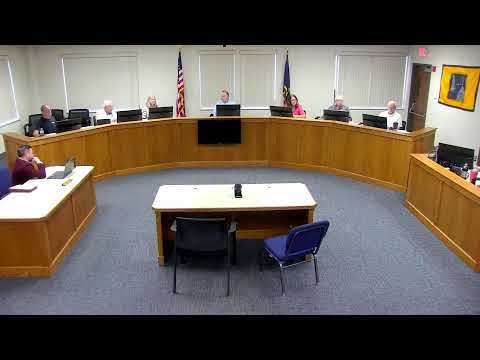
Members of the Super District (Seward District) board and Marshall County residents debated a proposed sewer project for the lakes area at a public meeting where consultants said PSA 1 (the lakes) carries an estimated $25,000,000 project cost and the board scheduled a July 12 information session for affected homeowners.
Members of the Super District (Seward District) board and dozens of Marshall County residents exchanged questions and arguments about a proposed sewer system for the lakes area during a public comment and regular meeting session. Consultants said the current priority service area (PSA 1, the lakes) has an estimated project cost of about $25,000,000; residents pressed the board for clearer information about who must connect, how exemptions work, and what financial assistance exists.
Board members and consultants described a multi-step process that includes design, land acquisition for pump stations, grant applications and later construction phases. JPR (the district's engineering consultant) and the board said the district initially ranked 13 potential service areas; PSA 1 around the lakes is being advanced first. The board approved a postcard notifying affected homeowners and scheduled a public information meeting for July 12, 9 a.m. to 11 a.m., at Plymouth Wesleyan Church.
Why it matters: homeowners said they face a potential large upfront hookup bill and ongoing monthly charges, while board supporters and water-quality professionals argued failing septic systems pose public-health and property-value risks. The board said the district is pursuing grant funding to reduce costs and has applied to state and federal funding sources; earlier grant applications were revised after an unsuccessful first submission.
Consultants told residents the project timeline for parts of the county could extend years beyond PSA 1. A resident said the projected $25 million figure applies to PSA 1 only and asked whether subsequent service areas would face similar or higher costs over time. An engineer said costs for later areas will depend on area size and complexity and could change materially over time.
Several homeowners asked whether they would be required to connect. JPR explained that connection requirements depend on property type and proximity: lakefront structures within 300 feet of an installed sewer main are generally required to connect; those not within the project boundary or beyond the 300-foot line may not be required to connect. The engineer said exemptions are available under current Indiana law for qualifying septic systems, and that an exemption period (explained as an initial 10-year period with up to two 5-year renewals under current Indiana rules) can apply but that the exemption filing period has not yet begun.
Residents asked about alternatives to centralized sewer such as aerobic treatment units; speakers said those technologies were considered but were set aside in the district's planning because of higher costs and limitations related to lot size, slope and separation requirements. The board emphasized its stated purpose is to eliminate septic in targeted areas to protect drinking water and lakes.
Board members and residents also questioned past county commitments for startup funding. One board speaker said the county council had discussed a $500,000 assistance fund that was never established and that Marshall County commissioners had promised $2,000,000 in ARPA funds; the speaker said other counties used larger ARPA allotments to subsidize projects (the speaker cited Elkhart and Allen counties). The board and some residents said that had the ARPA funds been available, interim bond exposure for homeowners might have been reduced.
The board reported completed right-of-way and ongoing land-acquisition work: a small parcel for Pump Station 1 requires zoning variances and minor-subdivision work before closing; the board is seeking roughly one acre for Pump Station 2 to allow space for future operational storage. The engineering team said it is finalizing the legal description of the district service boundary to make in-or-out determinations clearer.
The board also listed documents residents can consult: the Preliminary Engineering Report (PER), a Yellow River Watershed study (February 2018), and petitions filed with IDEM. The board said most technical water-quality and engineering details are in the PER and related documentation and encouraged homeowners who need property-specific answers to request site visits; JPR said it is scheduling site visits and noted the consultant is processing many requests.
Votes at a glance: during the meeting the board (voice vote) approved: the May 14 board minutes (motion to approve carried), acceptance of monthly financials and claims, approval of a frequently asked questions (FAQ) draft for posting, approval of the postcard announcing the July 12 information meeting, and a motion to close the open session for an executive session. The board also authorized district officers to review and approve a lawyer's response to correspondence from the Marshall County commissioners regarding removal authority of appointed trustees. The motions passed by voice vote with all members present answering "Aye." (Specific named tallies were not recorded in the transcript.)
What was not decided: the board did not finalize grant awards or construction contracts at the meeting; detailed fees per household and exact monthly rates were not set. Board members repeatedly told residents that financial assistance program details were not yet complete and that grant or loan availability would determine final household costs.
The Super District scheduled outreach and said notaries and staff would be available at the July 12 session for easement signing and to schedule property site visits.
Ending: the board closed the public portion of the meeting and moved to an executive session. Residents and the board were directed to the district website and the PER for additional technical details and to the upcoming July 12 public information session for one-on-one assistance and easement processing.