Get Full Government Meeting Transcripts, Videos, & Alerts Forever!
Get email alerts on the Broadband Infrastructure topic
No spam. Unsubscribe anytime.
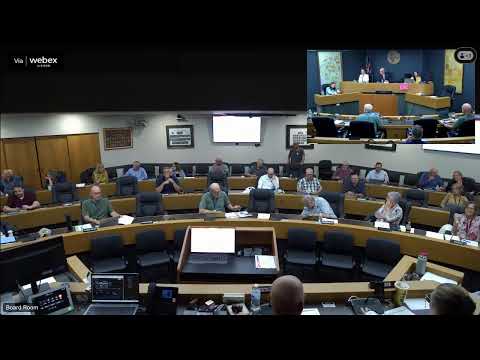
SURF Internet says federal BEAD rule changes likely to shift LaSalle County awards toward wireless; asks board members for outreach letters
Summary
Steve Carinder of SURF Internet told the LaSalle County Board on June 9 that recent Department of Commerce changes to the federal BEAD program will likely favor wireless and satellite solutions over fiber, delaying local builds and prompting SURF to ask district board members to provide outreach letters to help secure required easements.
Steve Carinder of SURF Internet told the LaSalle County Board on June 9 that recent changes in federal guidance for the Broadband Equity, Access, and Deployment (BEAD) program are likely to shift funding and awards away from fiber toward wireless and low‑Earth‑orbit satellite solutions, and that the change will delay local projects.
Carinder said SURF had been “preliminarily awarded” large fiber areas in LaSalle County under an earlier interpretation of the BEAD rules but that new Department of Commerce and NTIA guidance means the company now expects a “high likelihood” those areas will be serviced by wireless solutions. He told the board the change could produce “at least a 180‑day” delay to the program timetable.
The company representative described a county‑scale fiber plan that SURF said would create a footprint the company could expand from. Carinder said the LaSalle County project covered multiple districts and that the build would require easement agreements from each private parcel the fiber crosses — he estimated about 300 parcels for the project’s route. He asked that district board members consider writing short letters the company can include in outreach to parcel owners to confirm the company’s legitimacy and help secure easements.
“Each parcel along that pathway is essential. So if we miss one parcel we cannot build that mile stretch of road,” Carinder said, requesting board cooperation on outreach. He also said that, in some cases, limited compensation to landowners may be offered when an easement is required to complete a contiguous run.
Carinder showed a map that, he said, had previously identified green (SURF) areas and orange (another provider) areas for fiber in round one; he said gray areas had been targeted for a second round. He said the northeastern rural portions of the county have been dominated by wireless coverage, which limits fiber opportunities there, and that SURF is actively building in nearby counties through a separate Connect Illinois grant program.
Board members asked clarifying questions about easement compensation and timing. Commissioner Stackley asked whether property owners would be paid; Carinder replied that compensation would be considered if a single missing parcel blocked a run. No board action was required at the meeting; Carinder said SURF would reach out individually to district members.
Why it matters: fiber vs. wireless choices affect long‑term speed, reliability and maintenance for rural broadband. Easement requirements — parcels that must sign agreements for fiber to be built along public right‑of‑way — are a common bottleneck for rural fiber builds and can stop a contiguous section of cable if one parcel is not secured.
The presentation also outlined places SURF said it was already building under other grants, including projects around Magnolia and Varna and into neighboring counties; Carinder said the LaSalle footprint would interconnect with those builds.
Ending: Carinder said he would follow up with the district board members whose areas are shown on SURF’s map and supply draft letters for outreach. The board took no formal vote on the presentation.