Get Full Government Meeting Transcripts, Videos, & Alerts Forever!
Get email alerts on the Annexation Polaris topic
No spam. Unsubscribe anytime.
Muskogee council approves annexation of remaining John T. Griffin parcels amid sharp debate over Polaris impact
Summary
The City of Muskogee voted to proceed with annexation of six remaining parcels in the John T. Griffin Industrial Park after a heated public hearing that focused on whether the move — and an associated 3% electricity franchise fee — could force Polaris Technologies to cut jobs or relocate.
The City of Muskogee voted Wednesday to move forward with a resolution seeking annexation of six remaining parcels in the John T. Griffin Industrial Park, setting the stage for a public hearing and continuing a long-standing plan to fold the industrial park into city limits.
The vote came after more than an hour of public comment and debate that centered on whether annexation — and a municipal 3% franchise fee on electricity that would apply to city utility customers — would force Polaris Technologies to lay off workers or abandon expansion plans.
Supporters, including Port of Muskogee Director Kimber Scott and city staff, said annexing the whole industrial park is consistent with the city’s comprehensive plan and long-stated infrastructure investments. “Annexation has always been the plan,” Scott told the council, saying the comprehensive plan and past annexations anticipated bringing the full industrial park into the city to ensure even application of city services and fees.
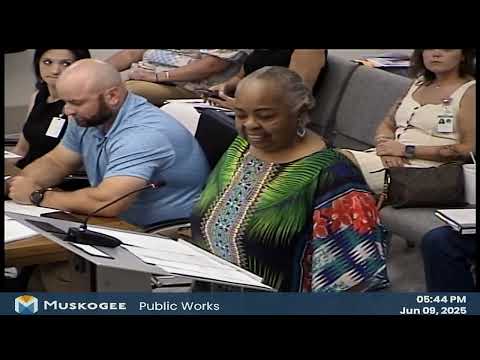
Opponents and several Polaris employees pressed the council to delay action and talk directly with the company. “If you continue to add fees, there comes a point where other jurisdictions will be deemed more fair than Muskogee,” said Dan Chipasquez, who identified himself as a resident and representative for Polaris during public comments. He urged the council to “tap the brakes” and get more information before approving annexation.
Polaris workers said the company has created local jobs with wages they described as well above county medians, and they warned the franchise fee could jeopardize pay and planned hiring. “This is about trust, stability and the economic health of Muskogee,” said Anna Stewart, who identified herself as a Polaris employee. Stewart told the council the company’s presence has allowed her family to pursue education and job stability.
Council members debated those economic warnings against a long-running municipal plan. Deputy Mayor Derek Reed and others said the city has already invested public resources — water, sewer and road improvements — to support industrial growth in the park and that treating tenants consistently is necessary. Councilor Jamie Stout was the lone council member to vote against moving forward with annexation.
Council approved the resolution to proceed with annexation by roll call: 8 in favor, 1 opposed. The resolution directs staff to publish notice and schedule the required public hearing under state statute.
What happened next: The council’s approval is a procedural step: it authorizes staff to publish the required notice and set a public hearing date so the annexation can proceed under state law. The council did not yet adopt an ordinance to change property boundaries or apply fees; those steps would follow the public hearing and any required legal steps.
Why it matters: The annexation would make the city the taxing and permitting authority for the remaining parcels and could make those properties — including Polaris — subject to the city’s franchise fee structure for electric utilities. Opponents warned that as an energy‑intensive manufacturer, Polaris’s electricity costs are a major line item and that application of a percentage franchise fee could materially affect competitiveness and jobs. Supporters said fairness and consistent application of city policy and services require bringing the entire park under city jurisdiction.
Next steps: The city attorney and planning staff will publish notice and set a public hearing date; state statute requires certain publication and hearing timelines. If the annexation ordinance moves forward after the public hearing, subsequent action could include formal adoption of city utility franchise rules and possible negotiations with affected businesses.
Speakers quoted above are drawn from the meeting public record.