Get Full Government Meeting Transcripts, Videos, & Alerts Forever!
Get email alerts on the Pedestrian Safety Traffic Calming topic
No spam. Unsubscribe anytime.
Boston council hearing spotlights speed-hump surge, emergency-access and equity concerns
Summary
City transportation staff defended an expanded speed-hump rollout and Vision Zero work while councilors, first responders and residents raised questions about placement, emergency response, concurrent signals and equity during a June 9 hearing.
A Boston City Council committee hearing on June 9 brought councilors, Boston Transportation Department officials and residents together to examine the city’s expanding traffic-calming program, especially the rapid installation of speed humps as part of the 2023 Safety Surge and the Vision Zero initiative.
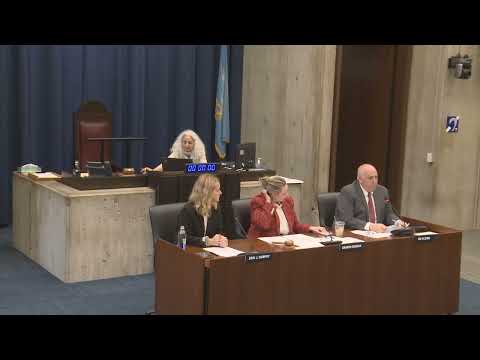
Councilor Sharon Durkin, chair of the Council’s Committee on Planning, Development and Transportation, convened the session that combined two dockets addressing the Safety Surge and a review of speed-hump effectiveness. Councilors and dozens of residents described cut-through speeding across neighborhoods and urged faster, more equitable deployment of safety treatments near schools, parks and senior facilities.
The hearing centered on how and where the city places speed humps, the program’s rapid scale-up, and trade-offs such as effects on emergency response and bus routes. Chief of Streets Yasha Franklin Hodge and other agency staff laid out program data and design rules; councilors pressed for stronger neighborhood-level prioritization and changes to concurrent signal timing to reduce vehicle-turn conflicts with pedestrians.
City presentation and data
Chief of Streets Yasha Franklin Hodge told the committee the city has worked to put safety “at the heart” of street design and tied current work to Vision Zero, the city’s policy goal to eliminate serious injuries and fatalities. Hodge said the city has accelerated speed-hump construction: "In 2023, we built 300 humps in 1 year. In 2024, we built more than 600 humps," and that staff are reviewing siting and design to ensure equitable placement.
Deputy Chief of Streets for infrastructure and design Julia Campbell and Amy Cording, BTD director of engineering, described technical limits and standards: speed humps are not installed on major arterial routes, priority EMS routes, steep hills or bus routes; current design guidance calls for spacing between humps of about 150 to 350 feet and permits installation on slopes up to about 12 percent. Staff said humps are designed to encourage comfortable driving at about 20 mph and to avoid impacts to parking, snow plowing and drainage where feasible.
Hodge and staff also cited local speed measurements to show effects on high-end speeding: in Boston projects cited by staff, the share of cars exceeding posted limits fell sharply — for example, Green Street in Jamaica Plain went from roughly one in three cars over the limit to about one in 30 after interventions; Poplar Street in Roslindale dropped from about one in five to one in 125.
Councilor and public concerns
Councilor Ed Flynn, a lead sponsor of one of the dockets, framed speeding as a public-health issue: "Speeding cars are a public health crisis," he told the panel, recounting neighborhood crashes and urging humps and raised crosswalks in high-foot-traffic commercial corridors as well as residential streets.
Several councilors asked why raised elements are not placed on busier commercial corridors and arterial streets. Hodge said the city generally avoids raised elements on arterials at the request of fire and EMS because those routes are relied upon for faster emergency access. BTD and public-safety officials told councilors they continue to coordinate; staff acknowledged trade-offs where removing concurrent signal phases or adding raised elements would reduce vehicle throughput but could create other safety or congestion issues.
Councilors and residents pressed staff on emergency-response impacts and design errors. Multiple speakers recounted that some firefighters and EMTs have told them speed humps delay response times; residents and councilors cited particular streets — L Street, Sleeper Street and others — where crashes or fatalities have occurred in recent years. BTD staff said they aim to avoid speed humps on priority EMS routes and noted one example where installation quality produced overly harsh humps that were later removed (Allendale Street).
Signage, concurrent signals and enforcement
Councilors repeatedly raised concurrent signal phasing — where vehicles turning and pedestrians receive right-of-way at the same time — as a local safety concern. Councilor John Fitzgerald urged the city to prioritize removing concurrency at problem intersections so turning vehicles do not share a green with pedestrians. Hodge and engineering staff said the new signal guidelines provide updated rules about when to use exclusive versus concurrent phasing and that changing many signals unilaterally could cause gridlock or create perverse incentives for unsafe crossings; they offered to brief the Council on the nuanced trade-offs.
On enforcement, staff noted that the Boston Police Department’s capacity to provide sustained traffic enforcement is limited and cited the need for automated enforcement tools. Several councilors and public commenters urged state action to authorize speed and red-light cameras; staff said the city supports state legislation enabling camera-based enforcement and that the city recently supported state authorization for limited camera enforcement (school-bus stop-arm and bus-lane enforcement) and may propose further measures.
Schools, equity and multi-jurisdiction issues
Councilors pressed for priority treatment around schools and parks. Councilor Enrique Pepin and others said families, crossing guards and school communities want quicker safety upgrades. Staff said school-area recommendations from Safe Routes to School and other programs are folded into paving and capital schedules when possible and that the speed-hump program gives special attention to areas with schools and parks.
Several councilors and witnesses noted that streets with the greatest cut-through traffic are often in neighborhoods with lower car ownership and raised equity questions about who bears the burden of traffic. Councilor Julia Mejia and others urged outreach to residents who are not regularly at planning meetings so priority-setting captures the most affected residents.
Public testimony
More than a dozen residents testified in the hearing, describing near-misses, requests for raised crosswalks, and concerns about the placement or removal of humps. Several speakers asked for audible pedestrian signals at key crosswalks, better crosswalk visibility, and durable physical pedestrian protections (concrete curb extensions rather than removable posts). Multiple witnesses cited recent pedestrian fatalities and urged faster, targeted interventions at dangerous intersections such as Andrew Square, Sleeper Street/Congress Street and multiple neighborhood streets across Dorchester, Roslindale, Mattapan and East Boston.
Formal action and next steps
Councilor Durkin closed the hearing by adjourning the two dockets under discussion (dockets 0266 and 0423). Staff agreed to continue consultations with district councilors, share schedules when construction programming is finalized later this year, and to brief the Council further on concurrent signals, school-zone timing and signage. City staff said they will continue to press the state for expanded automated enforcement authority and to coordinate with the MBTA, DCR and MassDOT on multi-jurisdiction corridors.
The hearing left clear policy tensions: officials urged rapid, design-led interventions that can be built at scale, while councilors, first responders and residents pressed for tighter local prioritization, measures that do not hamper emergency response, and clearer community engagement on placements and removals. The committee indicated it will seek follow-up briefings and data, including schedules for upcoming speed-hump construction and analyses of signal timing choices.