Get Full Government Meeting Transcripts, Videos, & Alerts Forever!
Get email alerts on the Land Use Development topic
No spam. Unsubscribe anytime.
Auburn planning board continues Brickyard Commons hearing after disputes over hydrogeologic reports and late filings
Summary
The Auburn Planning Board continued the public hearing on the Brickyard Commons site plan after debate over whether the applicant’s late-submitted technical memo and large file gave the public adequate time to review hydrogeologic and contamination materials. The board set a continued hearing date of June 18, 2025, at 6 p.m.
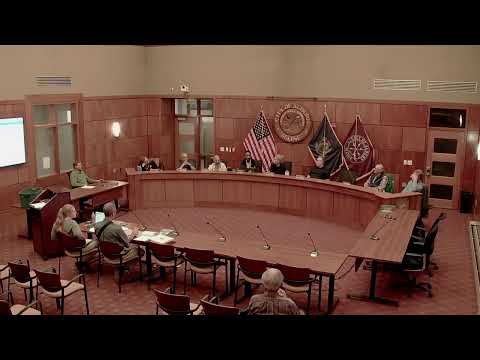
The Auburn Planning Board on June 10 continued the public hearing on the Brickyard Commons site plan after members and abutters disputed whether the applicant’s late-submitted technical memo and a website posting glitch gave the public adequate time to review hydrogeologic and other technical materials.
The board set a continued public hearing for June 18, 2025, at 6 p.m. The decision followed presentations from the applicant’s team and more than an hour of public comment focusing on groundwater flow, historical spill records at the adjacent transload property, and the timing of the applicant’s submissions.
At the meeting the applicant’s representative, Mike Otto, said the project team asked to be reviewed under the site-plan and subdivision rules and introduced engineer Michael Barnes of Mainland Development Consultants to summarize geotechnical and stormwater findings. Barnes said consultant borings and test pits show deeper bedrock under the nearby transload facility than under the proposed development and that historical work indicates groundwater flow generally toward the Little Androscoggin River and away from the Brickyard site. Barnes read from a consultant (Saint Germain) report and said that report concluded groundwater “is interpreted to flow southeast.” He also corrected an earlier misstatement about the report date, saying the Saint Germain report is from 2008.
Barnes summarized the subsurface work: the transload facility borings (seven borings) reportedly reached 20 to 24 feet without encountering bedrock; the project site test pits (15 pits) encountered bedrock at about 5–10 feet. Barnes also said the project’s stormwater plans were designed to meet state and federal permitting requirements for developments disturbing more than one acre.
City attorney Mike Carey, present to advise on procedure, told the board there were two distinct procedural questions the board should weigh: whether the applicant met the internal submission timing requirement and whether a staff posting glitch prevented the public from accessing documents in a reasonable time before the hearing. Staff reported the applicant’s memo was dated June 6 (a Friday) and that the public packet was posted but a large file initially failed to download; staff said IT fixed the posting Monday afternoon.
Multiple abutters and neighbors spoke during public comment. Renee Cody, an abutter, said she contacted planning staff Friday and could not open the new file until Monday afternoon and urged postponement: “the only ethical course, I believe, here is to postpone any decision on this project.” Stephen Veil, another nearby resident, said the June 6 posting at 3:28 p.m. left insufficient time to review roughly 150 pages of technical materials and asked the board to delay action so the public could review and respond. Other speakers raised concerns about traffic, lighting, and potential contamination from the adjacent transload/“Safe Handling” operations.
The applicant’s team responded to substance and process questions. In addition to Barnes’s geology and stormwater remarks, the applicant provided records staff said were already in department files and a four-page summary from Mainland explaining the materials. The applicant’s representative said they reviewed spill records and the DEP files and reported 18 spills recorded since the current owner took the site, most smaller than 15 gallons and only three that triggered DEP on-site inspections. On parking, the applicant said the full project would provide 193 spaces (about 2.01 spaces per unit), above the city minimum of 1.25 spaces per unit, and described a two-phase parking buildout with room to add spaces if demand requires it.
Board members debated the weight of the procedural problem. Some members and counsel said the statutory notice and the ordinance’s public‑hearing requirements had been met; others said the staff posting glitch undercut the planning board’s internal procedure that materials be made available by the Friday before the hearing. After discussion the board voted first to postpone to a July date (a motion passed 4–3) but then reconsidered that postponement and adopted a new motion to continue the public hearing to June 18, 2025, at 6 p.m.
The June 18 continuance preserves the record for further written or oral comments and gives the board and the public additional time to review the supplemental materials submitted by the applicant and staff’s packet. Staff said the materials currently posted online include the applicant’s memo and the referenced DEP documents; staff also said they will notify people who contacted the office about the posting problem that the packet is available.
The applicant and the board also discussed the earlier May planning-board direction to produce a hydrogeologic study; the applicant says the submitted materials and historical DEP-reviewed investigations support the conclusion that the site is not hydraulically downgradient from the transload facility. The board did not adopt any new direction to require or waive a particular study at the June 10 meeting; that is now an open question to be considered at the continued hearing.