Get Full Government Meeting Transcripts, Videos, & Alerts Forever!
Get email alerts on the Student Housing topic
No spam. Unsubscribe anytime.
Residents urge Williamsburg council to address rising student rentals, parking and party troubles in Indian Springs
Summary
Residents of Indian Springs told council members investor-owned student rentals and a proposed three-property development near the Hornsby House are creating parking, noise and safety problems and asked the city to enforce codes and consider new tools such as party permits.
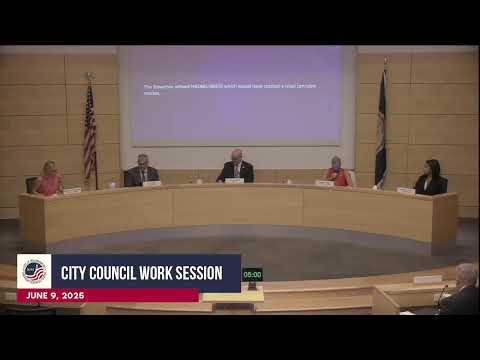
Residents of the Indian Springs neighborhood told the Williamsburg City Council at its work session that investor-owned student rental properties and a proposed three-property development around the Hornsby House are turning long-standing family blocks into party corridors and causing parking and safety problems.
The speakers said absentee landlords are buying multiple adjacent houses and converting them to rentals aimed at William & Mary students. "When 4 or 5 students live in a house without a landlord, the house is sometimes used as an off campus fraternity or sorority," said Henry Hart, who gave his address as 309 Indian Springs Road. Several speakers described large daytime and nighttime parties, public urination, trash and repeated police calls.
The issue, residents told the council, is both scale and clustering: properties bought and developed specifically for student rentals next to each other change neighborhood dynamics more than isolated student households. "We've gone from about 5 percent student rentals in the neighborhood when we first moved in to closer to 50%," said Rowan Lockwood, 141 Indian Springs Road and a William & Mary professor. Lockwood said recent 100-plus person parties with live bands have shaken homes and made the street unsafe for children.
Other longtime residents described the same pattern. "We love students," Joseph Haman, who said he has lived on Indian Springs for nearly 50 years, told council members. "We did not move to Williamsburg to live in a dormitory." Jim Heller cited the city zoning ordinance sections governing single-family districts and the architectural review district, saying those regulations are intended "to stabilize and protect the essential characteristics of the land and promote and encourage a suitable environment for family life." Heller and other speakers said enforcement has been inconsistent.
Bill Carr, 316 Indian Springs Road, presented neighborhood counts and a detailed permit idea aimed at reducing large parties. Carr said his neighborhood inventory identified 47 single-family residences and 19 student-rental houses; he estimated legal student beds at 58 and a suspected student population of 67, and said the proposed Field development would raise those numbers. Carr asked the council to consider a party-permit regime with requirements such as a 10-day application, attendee caps, posted permits, ABC permits for alcohol and liability information to give police and fire immediate contact information.
Speakers asked the council for several specific responses: stricter enforcement of existing noise, parking and property-maintenance rules; review of occupancy and certificate-of-occupancy enforcement to address suspected over-occupancy; consideration of a permit system for large gatherings; and steps to limit construction of purpose-built, high-occupancy student houses within existing single-family neighborhoods. Several speakers said the college’s shortage of on-campus beds and strict on-campus alcohol rules push student partying off campus.
Council did not take action at the work session. After public comment the body moved on to staff presentations. No vote or directive to staff was recorded on the Indian Springs comments during the meeting.
Ending: Residents said they are prepared to work with the city on targeted enforcement and on policy ideas such as party permits; multiple speakers asked the council to act before the fall semester. The council closed the public-comment period and proceeded to the staff legislative update presented later in the meeting.