Get Full Government Meeting Transcripts, Videos, & Alerts Forever!
Get email alerts on the Arts Culture Funding topic
No spam. Unsubscribe anytime.
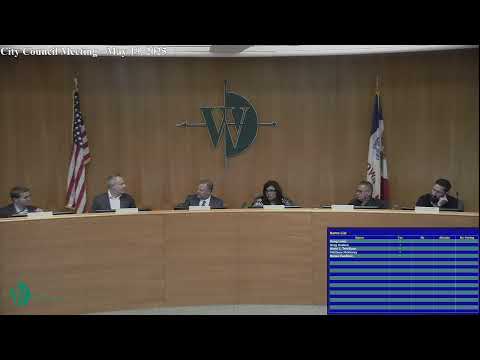
Council approves smaller Bravo and CATCH Des Moines shares; several members abstain
Summary
The council voted to reduce the city’s allocations to Bravo Greater Des Moines and the Greater Des Moines Convention and Visitors Bureau from previous rates to 25% under a metro agreement; three council members abstained on related items because of affiliations.
The West Des Moines City Council on May 19 approved adjustments to two regional cultural and visitor‑marketing funding agreements, reducing the city’s share to 25 percent (from the prior 28.6% formula) under a metro‑wide realignment.
Council members discussed the economic value of Bravo Greater Des Moines and CATCH Des Moines, and several council members—who serve on regional boards—said they were disappointed by the reduction but recognized the metropolitan effort to realign contributions across multiple jurisdictions. Councilman McKinney (who said he serves as Bravo chair) and Councilman Hudson (who said he serves on CATCH Des Moines executive leadership) both announced abstentions on the consent‑agenda votes where they had board roles; the meeting record shows three separate consent items on Bravo/CATCH funding changes were approved with 4 yes votes and one abstention recorded on each.
Council members said the reductions reflect broader fiscal pressures and statewide changes affecting partner cities and that the city remains committed to regional collaboration despite the smaller share. The measures passed on the consent agenda after staff and council discussion; no changes to program scope were made at the May 19 meeting.
Officials said they would continue to participate in regional planning and attend board meetings to sustain the events and marketing efforts those organizations coordinate. Council members emphasized the economic return the city receives from regional events, even as the city reduces its direct percentage contribution.