Get Full Government Meeting Transcripts, Videos, & Alerts Forever!
Get email alerts on the Planning And Solar topic
No spam. Unsubscribe anytime.
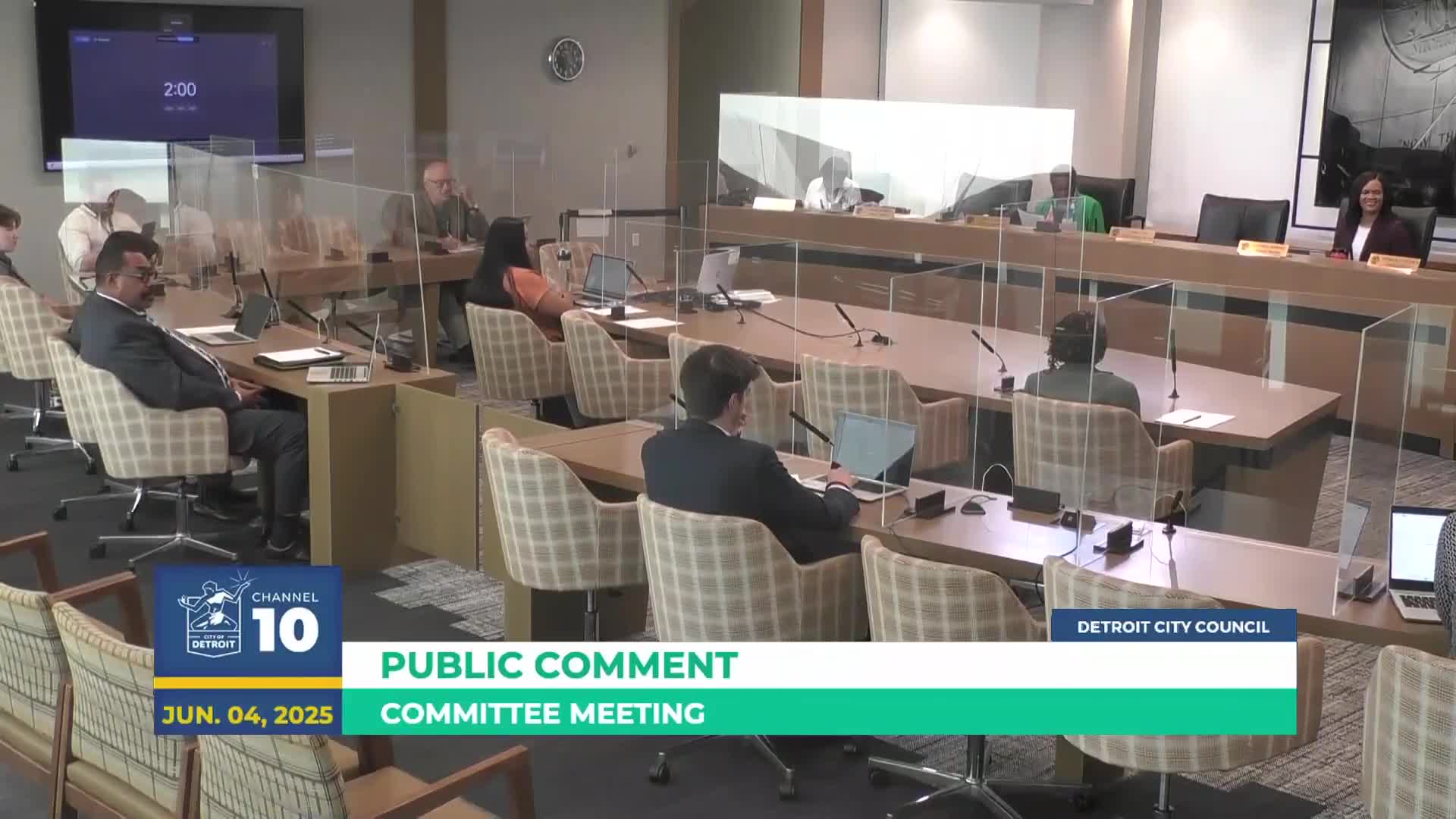
Residents tell council planning process for master plan advisory group and solar projects lacks transparency
Summary
During public comment, multiple residents criticized the Planning Department’s master plan advisory update process and raised concerns about transparency in stakeholder meetings and the siting of solar projects; the council committed to share a Legislative Policy Division response and residents asked for more public access to advisory meetings.
Several Detroit residents used the Committee of the Whole’s public‑comment period to press city officials for more transparency in the master plan advisory update process and to question the siting and community impacts of city‑supported solar projects.
A speaker identified as "Miss Warwick" told council members the Planning Department’s response on the master plan advisory group was "totally unacceptable" and accused staff of being "willfully nontransparent about who they're meeting with." "Residents are stakeholders," she said, adding she disagreed with the department’s assertion that neighborhood districts would replace cluster meetings because "we have way more different neighborhoods than we have districts."
Another caller, Malik Charlton, framed the solar initiative as part of what he called long‑running development policies that have displaced residents. He connected current projects to earlier economic development decisions and criticized large public incentives. Other callers from neighborhoods near proposed solar sites said the projects had not improved local conditions and raised air‑quality and enforcement concerns.
Councilmember Leticia Johnson acknowledged a Legislative Policy Division response to earlier inquiries and said staff would provide it to speakers who requested it. Member Waters and other councilmembers did not take formal action during the public‑comment period, but multiple speakers urged the legislative and planning offices to make advisory meetings open to residents and to detail stakeholder lists and siting criteria.
Speakers also raised related questions about land swaps, relocation supports for affected residents and whether the city had considered alternatives such as building arrays around residents who do not wish to move. The city’s Planning Department did not present during the public‑comment segment; council members said they would circulate the Legislative Policy Division’s written response to the commenters.
No formal vote or committee directive was recorded on the master plan process during the meeting; the issue appeared as public comment and may be raised again in committee business or future hearings.