Get Full Government Meeting Transcripts, Videos, & Alerts Forever!
Get email alerts on the Planning Transparency Solar topic
No spam. Unsubscribe anytime.
Residents press for transparency on master‑plan advisory and solar projects; council to revisit urban‑ag tax‑abatement question
Summary
Multiple public commenters raised concerns about secrecy in the master‑plan advisory group and the siting of solar arrays. The Committee of the Whole postponed a council president memo seeking an opinion about tax abatements for urban agriculture and asked for a two‑week follow up.
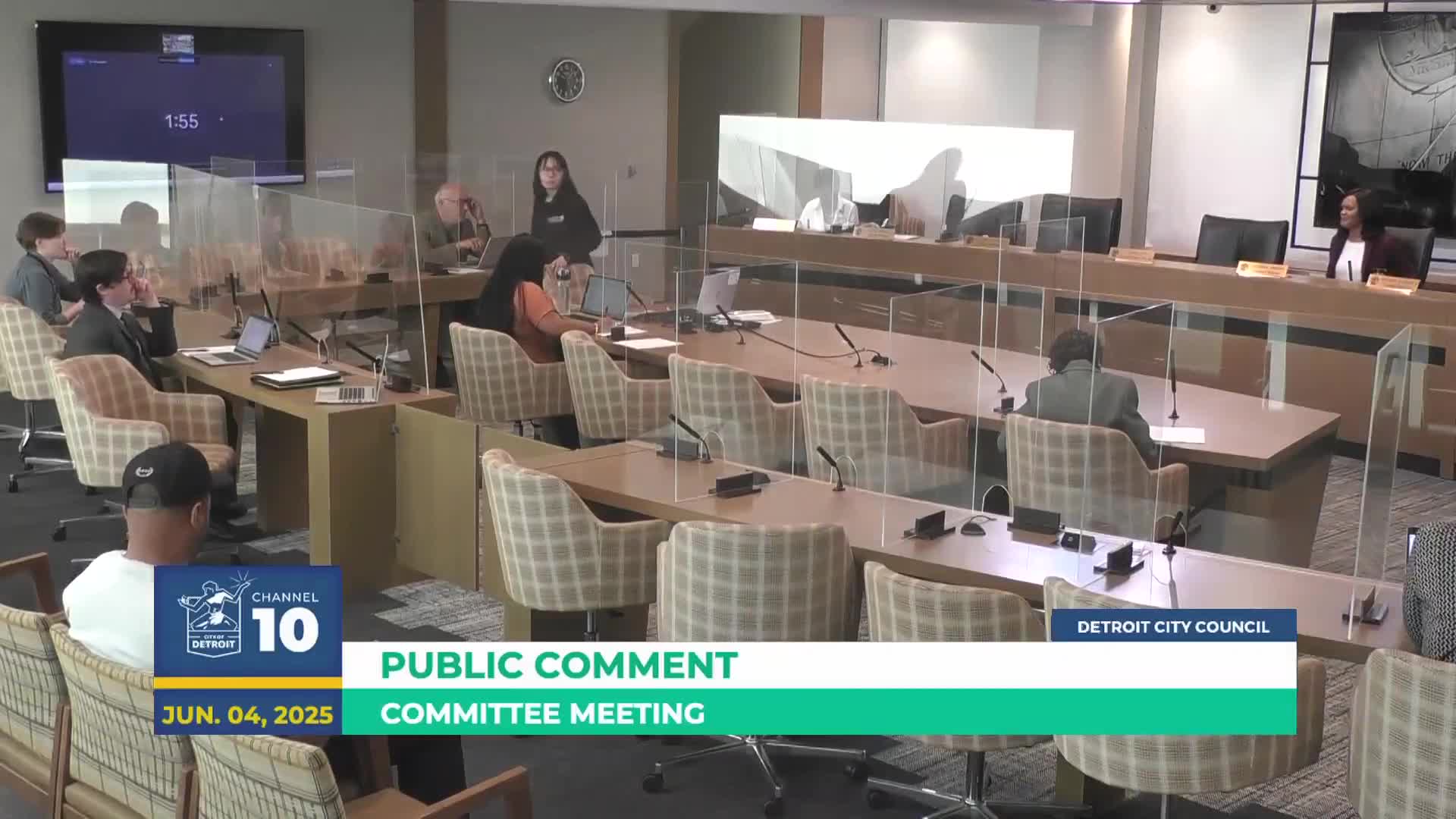
Several Detroit residents told the Committee of the Whole they are worried planning decisions are happening without sufficient transparency, and they urged the council to require more open participation in master‑plan advisory meetings and to scrutinize policies tied to solar projects.
Dimico (DiMico) Williams, introducing himself as a "citizen, taxpayer, legacy Detroiter," called for a city council advisory citizen commission to oversee council affairs and contracts. "We're seeing a lot of contracts…people that are not being verified," Williams said during public comment, urging a citizen board to monitor contracts and developments.
A separate caller identified as Miss Warwick criticized the planning department’s handling of the master‑plan advisory update process. "The response by the planning department about the master plan advisory update process was totally unacceptable," she said. Warwick said the department was not transparent about stakeholder meetings and that residents should be allowed to attend master‑plan advisory meetings. "Residents are stakeholders," she said.
Why it matters: Several callers linked concerns about transparency to recent development decisions and solar siting. Warwick raised an example she said was told to her by an official in the mayor’s office — that in at least one instance planners built solar arrays around a resident unwilling to relocate — and asked whether the city could employ similar accommodations for others rather than displacing families.
Council action: The committee addressed a separate agenda item (line item 6.9) regarding a memorandum from Council President Mary Sheffield requesting an opinion on tax abatements for urban agriculture. Members moved to bring that memorandum back in two weeks. "There's a request for a 2 week bring back," the chair said; the motion passed without objection.
Next steps: The committee directed staff to revisit the council president’s memorandum and return with whatever follow-up analysis the legislative policy division can provide. Public commenters urged the council and planning department to disclose advisory‑group membership and meeting access and to consider policies that avoid displacing longtime residents when city projects are sited.
Ending: The committee will return to the council‑president memorandum and related urban‑ag tax‑abatement issues in two weeks; residents and council members said they will continue to press for more transparent stakeholder engagement in master‑planning and development decisions.