
Administration seeks to simplify business licensing; council asks for clearer impact analysis on categories covered
Get AI-powered insights, summaries, and transcripts
Subscribe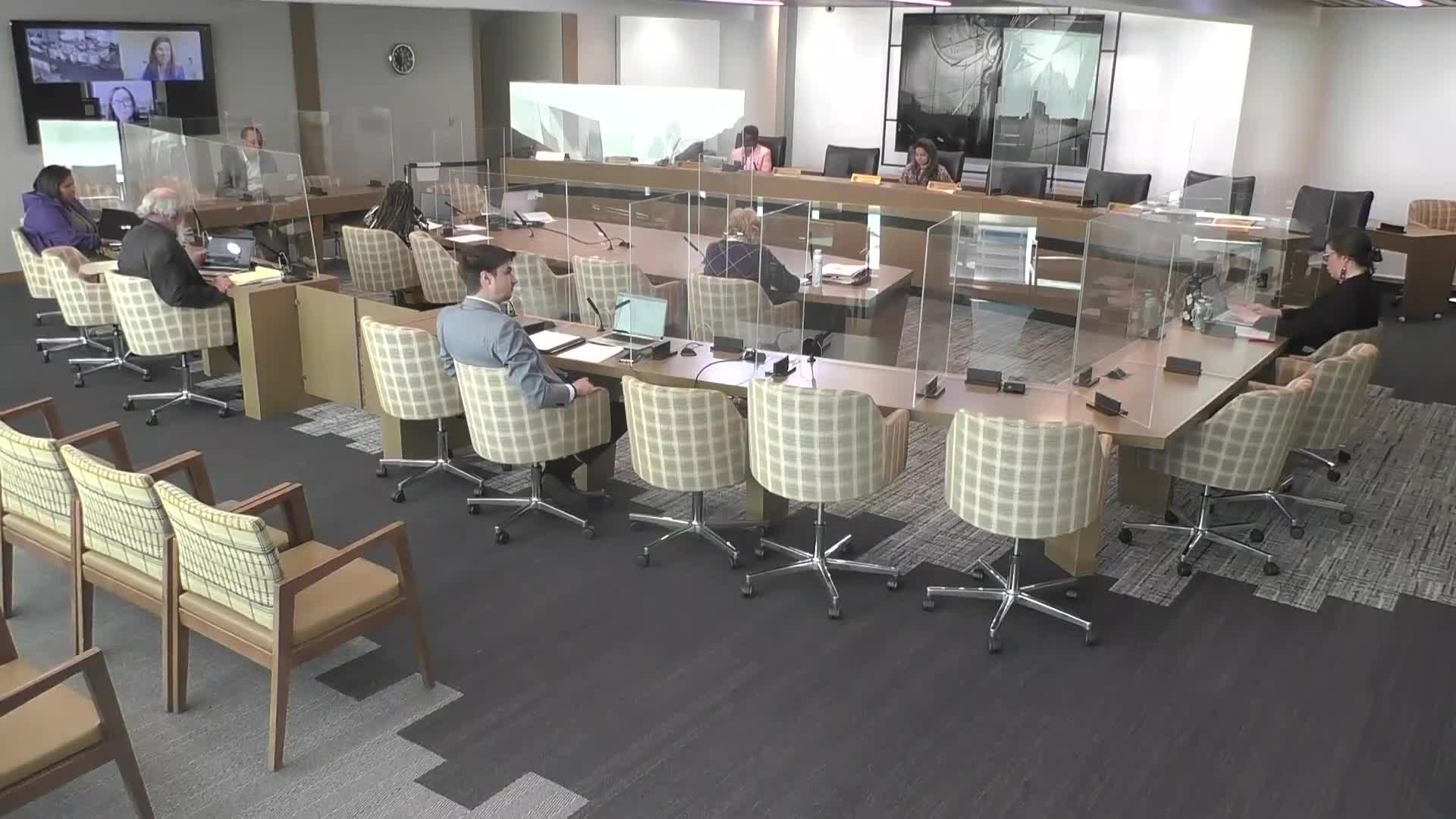
Summary
City administration presented proposed changes to business-licensing rules — removing a duplicative city restaurant license and extending many business-license terms from one year to two — and the subcommittee advanced one ordinance while tabling another for a one‑week follow-up and clearer public guidance.
City administration told the public health and safety subcommittee it has drafted changes to Detroit’s business licensing code intended to reduce friction for small businesses by eliminating a duplicate city restaurant license and aligning license terms and administrative procedures.
Deputy Chief Operating Officer Andrea Taverna and Law Department attorneys described two related ordinance drafts: one to revise the city’s food-service licensing rules (Chapter 19) and another to make broader changes to business licenses (Chapter 28), including extending license terms from one year to two and creating provisional licenses in some circumstances. "Over the last 6 months, the administration undertook a major effort to assess how small businesses work with city government," Taverna said, summarizing outreach with business owners, secret‑shopper testing and process mapping.
Committee action and concerns: The subcommittee agreed to send the Chapter 19 changes (food-service licensing) to full council for introduction and public hearing. On the broader Chapter 28 changes — which touch many licensed categories — committee members asked for more information and asked the administration to return in one week with a clearer, plain-language analysis of what types of businesses would be helped or affected and examples for the public. Councilmember Benson raised concerns about perceived impacts on sensitive license categories in Chapter 28, and law-department staff clarified that the draft does not seek to change substantive regulation for "vice" or sexually oriented businesses; that language appears in the chapter because Chapter 28 historically contains those definitions.
What the ordinances would do (administration summary): - Eliminate the city restaurant license that duplicates the state health department’s restaurant licensing rules, reducing a duplication in requirements for food-service businesses. - Move many city business licenses from annual renewal to a two‑year term where state law permits, aligning the cadence with building oversight and reducing administrative burden. - Create provisional business licenses (up to 12 months) and make it possible for departments to accept repayment plans for de minimis fees under certain conditions.
Why council asked for more time: Council members asked for an explicit list of license categories and examples (retailers, shelters, theaters, groceries, restaurants, etc.) to be published with the ordinance so the public can see who would be affected. Councilmembers also requested confirmation on how state law interacts with the proposed two‑year license term for certain regulated categories.
Next steps: The subcommittee voted to send the Chapter 19 ordinance to full council for introduction and public hearing. The broader Chapter 28 amendment was pulled back for further committee discussion and will be revisited in one week, with administration staff committing to publish a plain‑language impact summary for stakeholders.