Get Full Government Meeting Transcripts, Videos, & Alerts Forever!
Get email alerts on the Collections And Blight Enforcement topic
No spam. Unsubscribe anytime.
Detroit council requests detailed accounting of collections contract after DAH reports $13.7 million recovered
Summary
The council asked the Department of Appeals and Hearings for a written breakdown of collections, vendor fees and who benefited from settlements after DAH reported roughly $13.7 million collected under its collections vendor; members raised concerns about garnishments affecting seniors and about settlements negotiated by the law department.
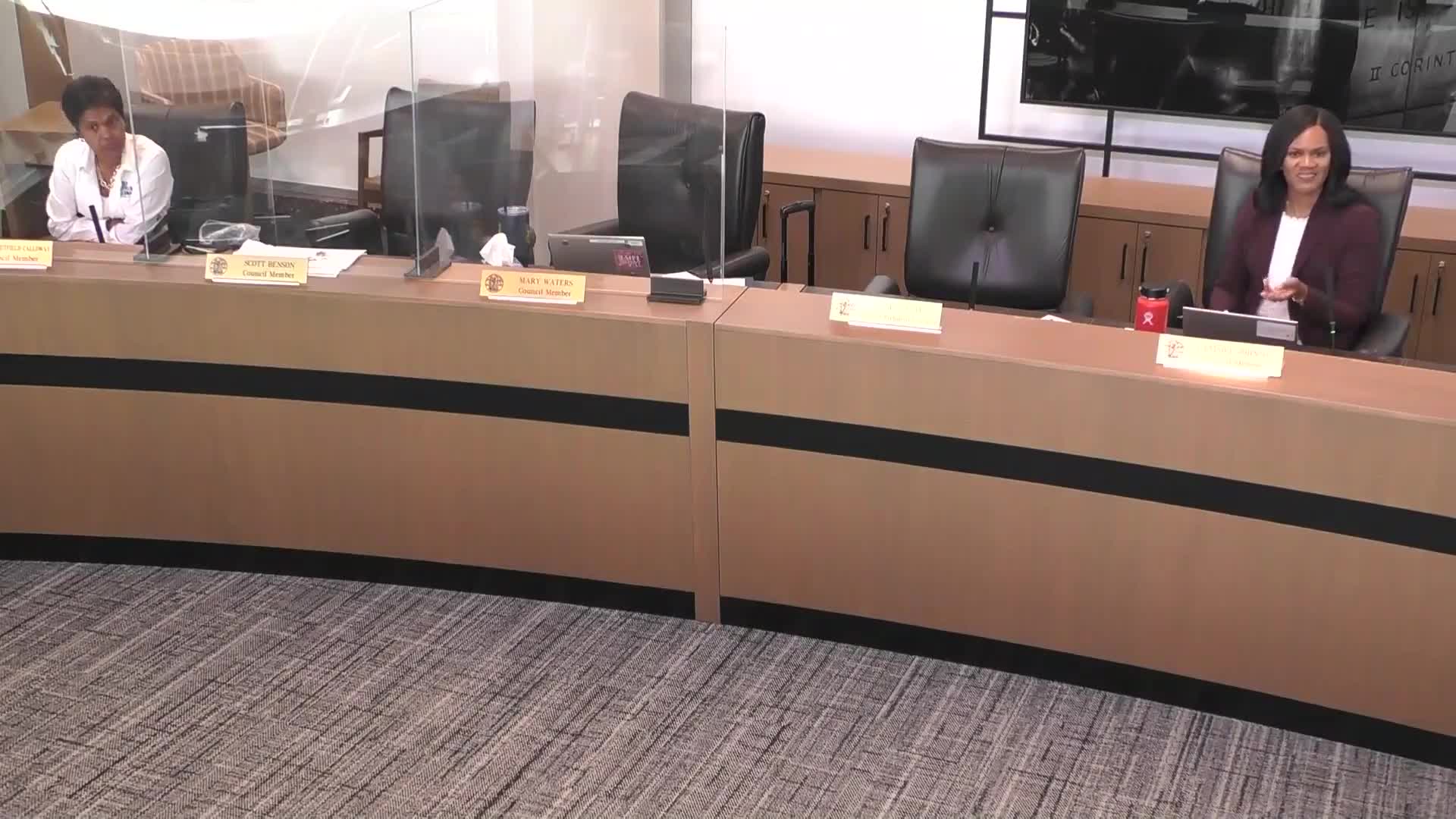
The Committee of the Whole asked the Department of Appeals and Hearings (DAH) to provide a written accounting of collections activity since 2021 after Director Julianne Pastrill told the committee the city's collections vendor had recovered about $13,700,000 since placements began in March 2022.
Pastrill described the Linebarger, Goggin, Blair and Sampson LLP contract as a contingency-fee arrangement and explained the vendor—ee schedule the department uses: 10% if a file is placed within six months of judgment, 25% for files placed more than six months after judgment, and 30% for collections that result from Third Circuit Court actions because the vendor pursues garnishment. She said funds collected on adjudicated judgments are returned to the city's general fund.
Council member Angela Whitfield Callaway asked for detailed yearly breakdowns of outstanding amounts, what the vendor has collected and how much the vendor was paid; she specifically requested the 2021—2025 picture and urged DAH to provide how collections are recorded in the general fund. Callaway also said she is concerned about garnishing low-income and senior residents and asked what protections exist for owner-occupied, low-income households.
Pastrill noted that DAH has an in-house process for judgment reminders and that files are automatically transferred to the vendor when unpaid reminders pass a specified period. She also said the department now uses a brightly colored envelope for judgment reminders to increase notice visibility. On the issue of settlements reportedly involving national retailers and large property owners, Pastrill said settlement negotiations are handled by the law department and not by DAH; DAH adjudicates hearings but is not a party to consent agreements.
After the discussion, the committee voted to bring line item 7.6 back in one week so DAH could provide a written breakdown of collections, a residential/commercial split, payment amounts to the vendor, and clarification on how recovered funds are recorded and spent.