Get Full Government Meeting Transcripts, Videos, & Alerts Forever!
Get email alerts on the Economic Development Small Business topic
No spam. Unsubscribe anytime.
Council offices propose business-license reforms; council member asks for clarity on scope and affected businesses
Summary
City administration presented ordinances to streamline business licensing and extend license terms from one to two years; the subcommittee advanced changes to food-service licensing but asked for a follow-up on Chapter 28 reforms that include definitions for sensitive categories.
City administration asked the Public Health and Safety Subcommittee to advance ordinances designed to simplify licensing for small businesses by removing a duplicative city restaurant license and extending the term of many business licenses from one year to two. The subcommittee approved sending the restaurant-related changes to the public hearing process but requested additional briefing and a one-week return for proposed Chapter 28 amendments.
Deputy Chief Operating Officer Andy Taverna summarized the administration’s review of the city’s business permitting and licensing processes and said the effort included interviews with business owners, customer surveys and ‘‘secret shopper’’ testing. Taverna said the intent is to reduce duplicative requirements and ease navigation for small businesses. He told the committee the city intends to remove a city restaurant license that duplicates the state-administered health department license and to align many city business license terms with building oversight by extending terms from one year to two.
V. Sarafoski of the Law Department joined the presentation. Taverna said other administrative changes would include provisional business licenses and limited repayment plans for de minimis fees; the administration plans a small-business concierge team and internal improvements to ease customer navigation through permitting.
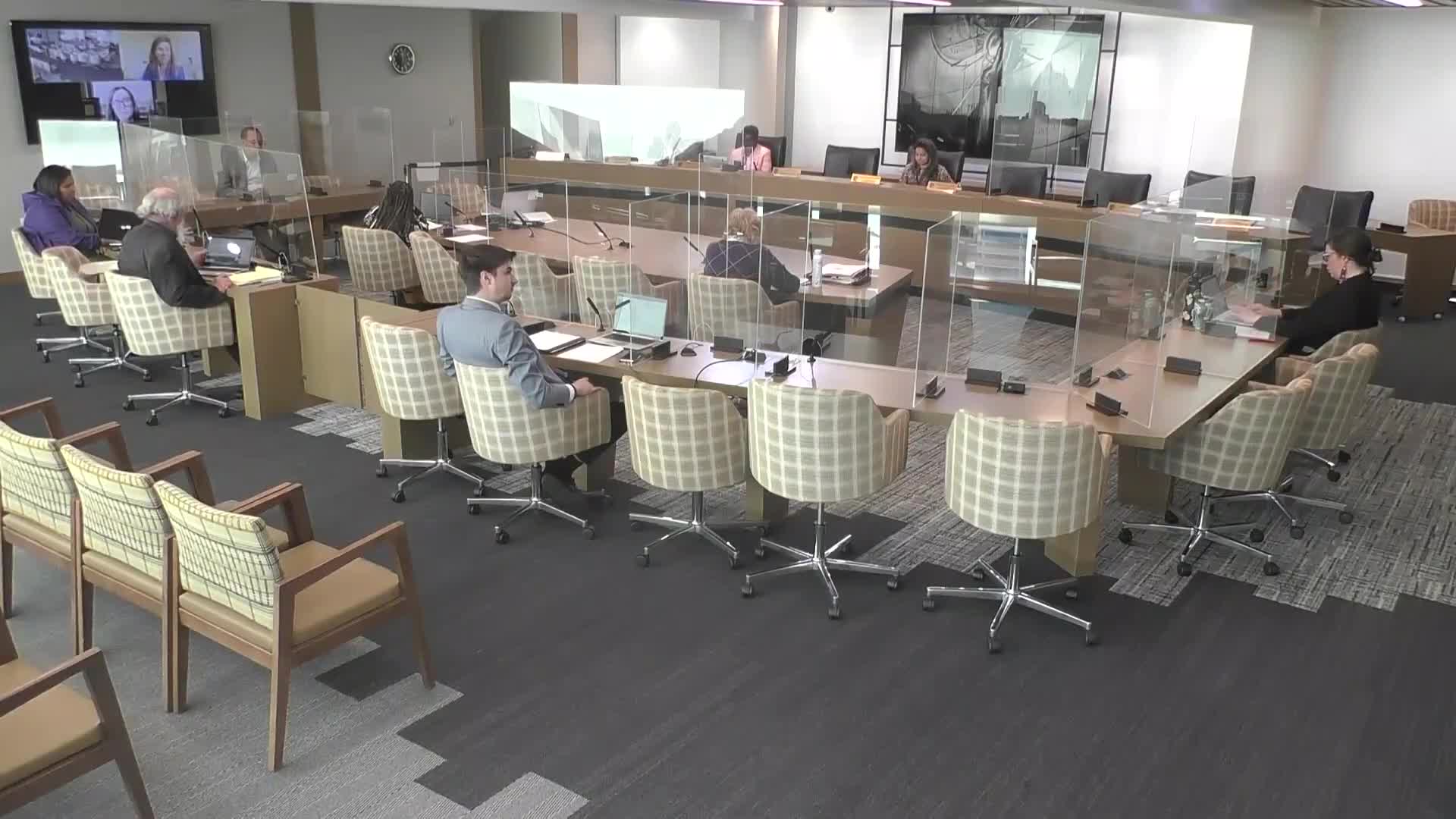
Council member Benson pressed the administration on Chapter 28 language that reproduces detailed definitions for sexually explicit and other regulated businesses; Benson asked whether the proposed changes would make it easier for such businesses and requested examples of which business categories would be affected. Taverna and Law Department staff said the definitions are existing text from Chapter 28 and that the proposed reforms are intended to apply broadly to city-licensed businesses (restaurants, retail, shelters, theaters, gas stations, etc.). The subcommittee moved to send the restaurant-item (6.17) to new business for introduction and public hearing; for the Chapter 28 changes (6.18) the committee voted to bring the item back in one week for further discussion and a supplemental analysis that lists which business types would be affected.
Members asked the administration to publish a plain-language analysis describing which license categories the changes will affect and to include examples of businesses that will benefit. The administration agreed to provide a fuller presentation and to publish explanatory material ahead of the public hearing.
Speakers quoted in this article are drawn from the meeting record and include the deputy chief operating officer and law department representatives.