
Subcommittee advances ordinance to set prices, enforcement for city-run EV chargers; officials outline rollout
Get AI-powered insights, summaries, and transcripts
Subscribe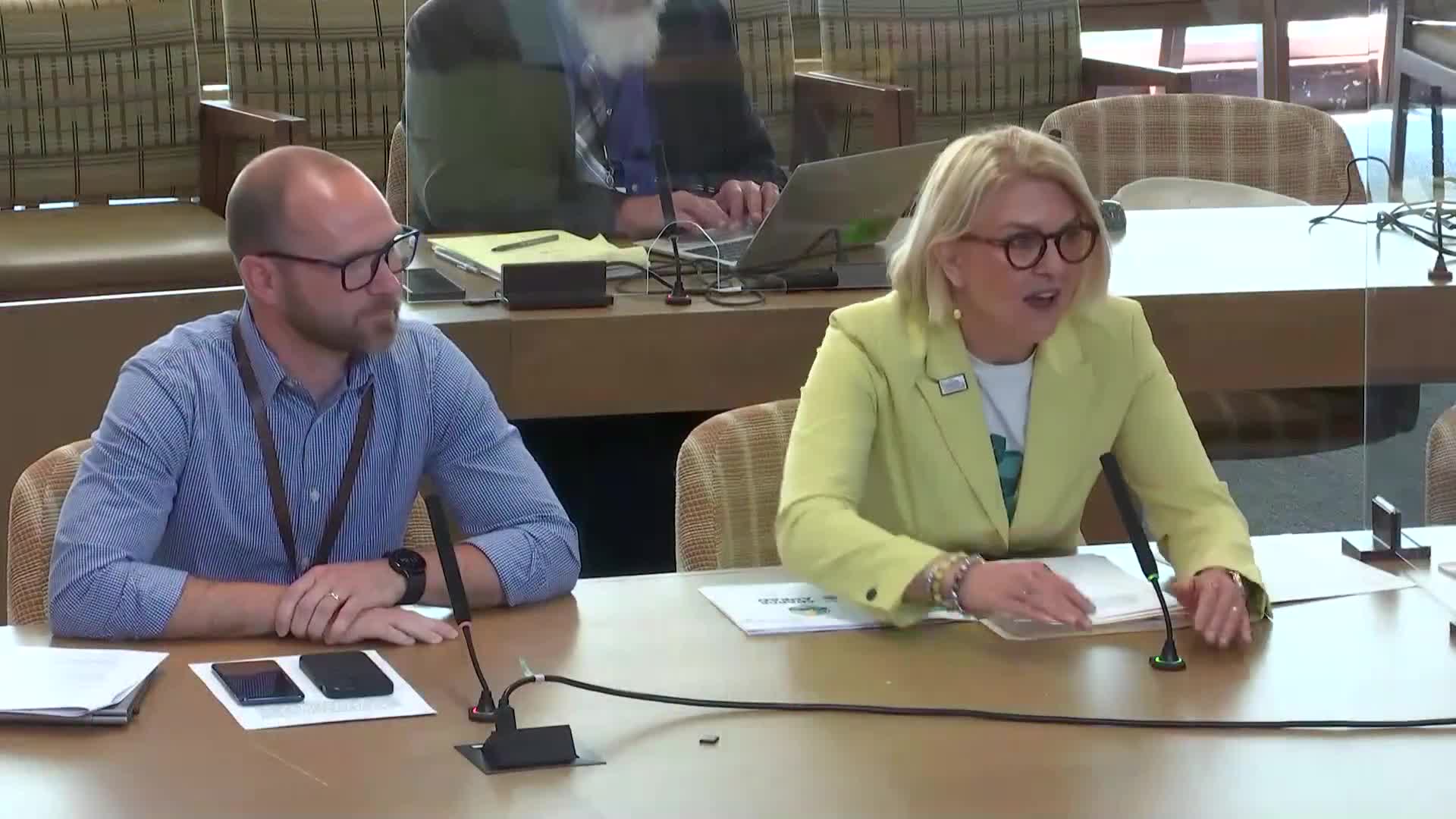
Summary
A Detroit City Council subcommittee voted to advance an ordinance that would let the city set rates, idling fees and enforcement rules for publicly accessible electric vehicle charging stations and establish a revenue mechanism to cover city costs.
A Detroit City Council public health and safety subcommittee voted to send an ordinance to the full council that would create the legal framework for city-managed electric vehicle (EV) charging stations, including pricing formulas, idling fees and enforcement tools.
The ordinance would amend Chapter 48 of the 2019 Detroit City Code (Utilities) to authorize city rate-setting for charging stations, permit pass-through of DTE electricity charges and establish an "adder" fee to recoup city operations, maintenance and capital costs. "The ordinance itself is required because we need to be able to actually set a price, to, you know, collect revenue, for the use of this infrastructure," Tim Slusser, chief of mobility innovation, said during the discussion.
Why it matters: City officials framed the measure as part of a "Detroit Charging Ahead" initiative to expand publicly accessible fast-charging infrastructure, support local manufacturing of EVs and reduce transportation-related emissions. The subcommittee’s action was to send the ordinance to new business for introduction and to set a public hearing.
Rollout and funding: Administration officials said two city contracts (awarded last fall) are being put into service using ARPA funds; two charging sites were expected to be operational by late summer, with a goal of 10 sites by the end of the calendar year and a long-term plan of 23 locations citywide with at least four chargers at each site. Vendors on the ARPA contracts include MasTec and another competitively procured vendor; city staff said additional federal grant funds are being sought to expand deployment.
Pricing and enforcement: The ordinance would do two main things: declare that DTE electricity charges are a pass-through and authorize an "adder" fee set by council resolution to cover the city’s costs (operations, maintenance, overhead). The law would also authorize idling fees and towing for vehicles that block charging spaces after a grace period. Committee discussion referenced a 15-minute grace period written into the ordinance and an eight-hour threshold before a vehicle could be towed; officials said the exact adder fee would be set later by resolution.
Technical standards and customer experience: Officials said the city will prioritize DC fast chargers and target a minimum of 150 kW per charger to balance charging speed and reliability. City staff also described plans to favor individual-station redundancy (a separate charging cabinet per parking space) to reduce the risk of multiple parking spaces being out of service when a single unit fails.
Accessibility and locations: Department of Neighborhoods staff said the city is targeting a mix of corridor and neighborhood sites — including neighborhood businesses and co-ops on corridors such as Woodward, Gratiot and Jefferson — and emphasized locations that provide amenities for drivers during charging. The administration said it intends the program to benefit Detroit residents, workers and local businesses, and to include intentional outreach to neighborhood owners and small businesses to be site partners.
Next steps and public input: The subcommittee voted to send the ordinance to full council for introduction and to set a public hearing; officials said a fuller presentation with the proposed fee schedule, proposed sites and a public comment period would be provided at the hearing. Staff also said the city will seek to educate users and maintain discretion to waive fees during an initial education period.
Quotes and context: "We're going to be a little bit, you know, cheaper than what, you know, the current market looks like today," Tim Slusser said, noting that federal grant funding subsidizes much of the capital cost and allows lower customer pricing. Council Member Benson emphasized equity and neighborhood deployment: "I'm a huge proponent of sustainability... we're making this infrastructure available to our residents."