Get Full Government Meeting Transcripts, Videos, & Alerts Forever!
Get email alerts on the Zoning Rewrite topic
No spam. Unsubscribe anytime.
City staff outlines proposed rewrite of downtown commercial zoning to guide density and retail mix
Summary
City planning staff presented a draft approach to rewrite downtown commercial zoning into a unified development code, proposing FAR adjustments, step-back rules and retail-emphasis areas to shape future development and reduce reliance on Planned Unit Developments (PUDs).
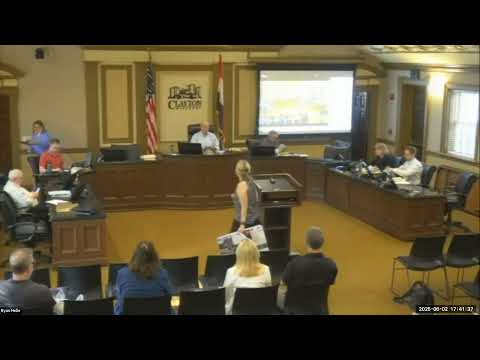
City planning staff presented a broad, early-stage proposal to revise downtown commercial zoning (C-1, C-2 and High-Density Commercial) as part of a unified development code effort intended to clarify expectations for density, building form and retail activation.
Staff said the rewrite is informed by the comprehensive plan and recent development patterns. Key elements discussed included: reorganizing and consolidating repeated rules across overlays; introducing step-back requirements above specified floors to reduce upper-story massing adjacent to lower-scale areas; right-sizing floor-area-ratio (FAR) limits so regulations reflect existing building patterns and provide clearer development outcomes; creating “retail emphasis areas” where at least 50% of ground-floor frontage should be street-activating uses (restaurants, retail, personal services); and permitting mixed-use residential with no minimum unit size where appropriate. Staff also flagged technical changes for surface-parking rules along corridors such as Clayton Road.
Staff showed maps indicating where existing FAR and building patterns would be retained (notably on the North Central/Forsyth retail corridor) and where higher FARs and height incentives would be allowed to encourage more intense development without forcing parcel consolidation. Commissioners broadly signaled support for the general approach while asking staff to provide concrete examples and comparisons for how the new FAR, height and step-back rules would change existing development rights on specific parcels. Commissioners and staff also noted that a proposed change aims to reduce reliance on the Planned Unit Development (PUD) process by embedding more predictable standards in base zoning while preserving the PUD as a tool for exceptional projects.
Staff said the next steps are drafting the text amendments, presenting the draft unified development code and carrying the items through the public hearing and adoption process; staff also promised to prepare comparative examples and maps for future hearings so the commission and the Board of Aldermen can better assess likely outcomes.