Get Full Government Meeting Transcripts, Videos, & Alerts Forever!
Get email alerts on the Kisa Accreditation topic
No spam. Unsubscribe anytime.
USD 443 outlines KISA 2 accreditation plan, prioritizes quality instruction and attendance targets
Summary
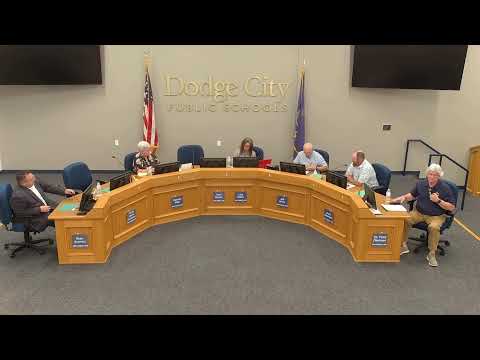
Amy Loder presented a detailed update on Kansas' KISA 2 accreditation process and Dodge City USD 443's district action plan at the June 9 Board of Education meeting, telling board members the state is shifting from a five-year cycle to an annual accreditation cycle rolled in over three years.
Amy Loder presented a detailed update on Kansas' KISA 2 accreditation process and Dodge City USD 443's district action plan at the June 9 Board of Education meeting, telling board members the state is shifting from a five-year cycle to an annual accreditation cycle rolled in over three years.
Loder said the state framed accreditation around three determination areas — school improvement, student outcomes and compliance — but that Kansas will not hold districts to student-outcome thresholds until the 2026-27 school year. "We will still be reporting on student outcomes, and they haven't quite released what those outcome expectations will be yet," Loder said.
The district chose "quality instruction" as its primary focus and will concentrate on two supporting structures: professional collaboration and tiered systems of support (MTSS). Loder described district action steps including streamlined PLC agendas aligned to assessment timelines, principal PLCs and consultant-led leader development, training for PLC facilitators during Summer Institute, and building-level "success analyses" using state assessment results and FastBridge screening data.
Loder cited several near-term targets: within six months, buildings will align PLC agendas and leadership timelines; within a year, the district will have trained PLC facilitators and gathered perceptual data on staff autonomy and collective efficacy. For MTSS, the six-month target is a success analysis of state assessment and screening data; the one-year target is reporting on aggressive growth across grade levels and folding IMIS (implementation fidelity) data into reviews.
On chronic absenteeism Loder said the district is using the state's AMOS reporting to set goals and compared last year's rates: "elementary currently is 11.8," she said, adding that the 2024-25 numbers were still rolling in. Loder and others clarified the state's technical definition varies by level (for example, middle school counts missing five of eight periods as a substantial portion of the day).
Loder also summarized this year's needs-assessment work required under House Bill 2022. Building leadership teams identified strengths (data-driven instruction, interventions, collaborative culture) and barriers (Tier 1 fidelity and rigor, limited paraprofessionals, time for analysis and planning). Budget requests tied to those needs include continued subscriptions for FastBridge and EduCLIMBER, PLC planning time, and funding to support family engagement platforms such as ParentSquare.
Board members and administrators discussed measurement concerns and the district's approach to non-test indicators. One board member voiced frustration with over-reliance on standardized assessments and urged attention to daily, classroom-level successes that state tests do not capture; Loder and others acknowledged that classroom-level progress and social-emotional gains are important complements to state metrics.
Loder described the timeline ahead: a six-month check-in (noted on the district calendar as Sept. 11), peer-review visits with similar districts in February, and an updated plan to submit to the Kansas State Department of Education after next school year. She also noted the state will provide additional clarifications and that district staff have been working with KSDE and peer districts during plan development.
No formal board action was requested or taken on the accreditation plan at the June 9 meeting; the presentation and the needs-assessment summary were informational and will feed budgeting and implementation work for 2025-26.