Get Full Government Meeting Transcripts, Videos, & Alerts Forever!
Get email alerts on the Environment Superfund topic
No spam. Unsubscribe anytime.
State, tribal and federal trustees outline damage-assessment plan for Columbia Falls Aluminum site; public comment extended
Summary
Montana's Natural Resource Damage Program and co-trustees released a draft natural resource damage assessment plan for the Columbia Falls Aluminum Company site, describing contaminants, the geographic and temporal scope of assessment, and extending the written public comment period to July 23.
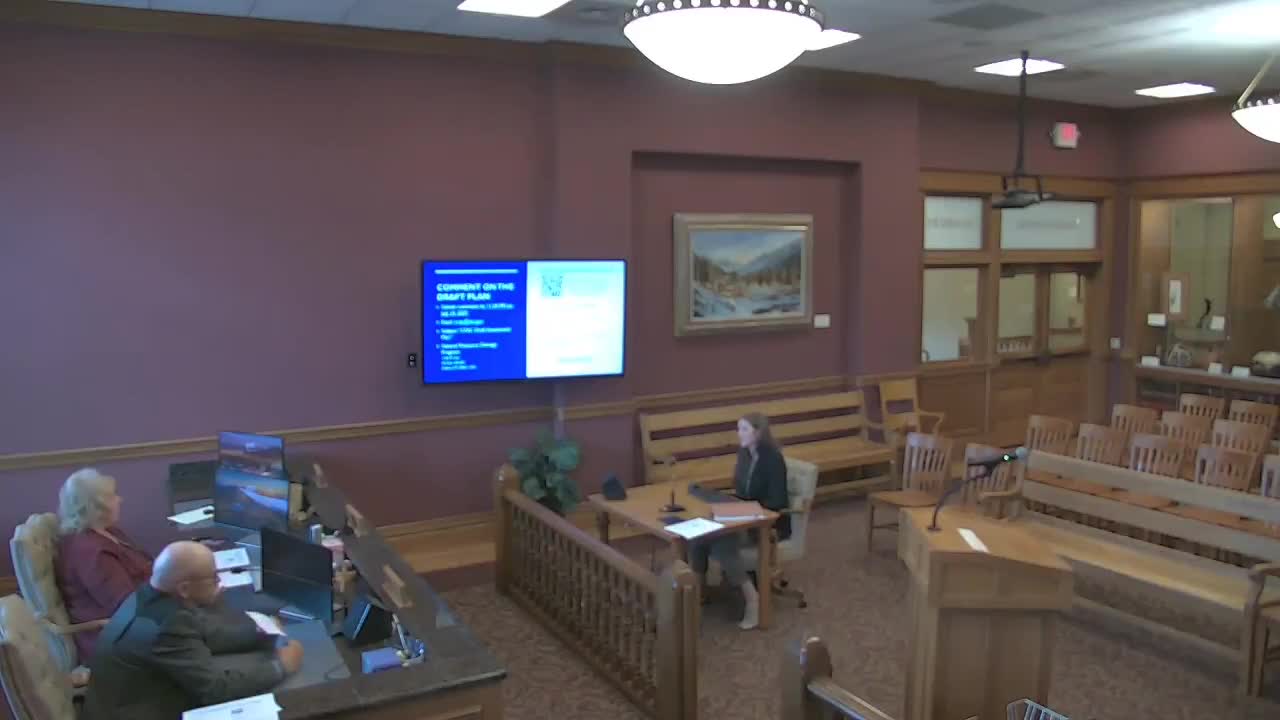
Montana Natural Resource Damage Program scientists on Tuesday presented a draft natural resource damage (NRD) assessment plan for the Columbia Falls Aluminum Company (CFAC) site and said they will accept written public comments on the plan through July 23.
The draft plan, prepared by the state with the Confederated Salish and Kootenai Tribes and two federal agencies, outlines assessment steps the trustees say are needed to determine whether releases from the former aluminum reduction plant injured public resources — and, if so, to quantify damages and fund restoration projects.
Trustees said the site has multiple contaminant sources, including spent potliner and sludge ponds, and named fluoride, hydrogen fluoride and polycyclic aromatic hydrocarbons (PAHs) among contaminants of concern. The spatial scope will include the 1,300-acre CFAC property and “anywhere that contamination from the site has come to be located,” and the trustees said they will consider injuries and losses from 1981 forward — the earliest date for which damages can be recovered under state and federal law.
Sydney Stewart, a scientist with the Natural Resource Damage Program, summarized the plan and the assessment phases: “The meat of the assessment plan is injury determination, injury quantification, and damage determination,” she said. The trustees said injury determination will evaluate exposure pathways such as airborne emissions, runoff and groundwater discharge; injury quantification will estimate the area, volume or degree of lost services; and damage determination will identify restoration projects and costs.
Chris Stark, chief scientist for the Confederated Salish and Kootenai Tribes, said the tribe’s focus includes fish such as bull trout and other biological resources protected by treaty and by tribal stewardship. “When the bull trout were harmed, that's where we come in,” he said.
The trustees said they will evaluate both remediation-related effects (for example, habitat disturbance caused by cleanup work) and longer-term restoration needs. Catherine Hausrath, chief legal counsel for the NRDP, emphasized that recovered funds must be used to restore, replace or acquire the equivalent of injured resources and are held in a dedicated account, not the state general fund: “State resources will be used to assess state resources,” she said.
Trustees described proposed assessment tasks that start with compiling and evaluating existing data for water, groundwater, soils and biological resources, followed by targeted sampling or studies if data gaps remain. They said tribal cultural losses will be assessed in coordination with the CSKT and may use separate or supplementary valuation approaches.
Trustees said the NRDP’s work on this site began after interagency review and a pre-assessment screen in January 2024 that found sufficient information to proceed to a formal assessment. The program told the commission the state provided initial funding through legislation and that past NRDP claims statewide have recovered past costs as part of settlements.
The NRDP staff said a public meeting on the draft plan was scheduled in Columbia Falls the same day as the commission meeting and asked the commission and community for suggestions about local restoration projects that could serve as “exemplar” projects for damage valuation.
Written comments on the draft assessment plan will be accepted through July 23; trustees said they will respond to the public comments when the plan is finalized.