Get Full Government Meeting Transcripts, Videos, & Alerts Forever!
Get email alerts on the Attendance topic
No spam. Unsubscribe anytime.
Derby reports drop in chronic absenteeism districtwide; high school rate remains elevated
Summary
District staff told the board June 9 chronic absenteeism fell districtwide by 3.48 percentage points year to date, with some elementary schools improving and Derby High School declining from 31.2% to 22.67%; administrators cited weather and influenza as factors and said targeted interventions will continue.
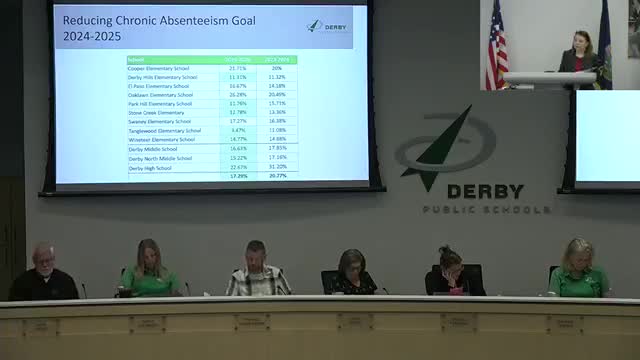
Derby district administrators reported June 9 that chronic absenteeism—the state measure for students missing 10% or more of school days—declined districtwide for the 2024–25 year but remains a key focus for targeted interventions.
Assistant Superintendent Dr. Putnam Jackson and Holly Putnam Jackson (reporting chronic absenteeism data) explained the distinction between average daily attendance and chronic absenteeism, and said the district had set a goal of 12–13% for chronic absenteeism. The district’s cumulative year result improved by 3.48 percentage points compared with the prior year, they said.
Results by school showed varied outcomes: Park Hill Elementary improved from 15.71% to 11.76%; Stone Creek and Tanglewood also posted decreases; Derby High School showed a substantial drop from 31.20% to 22.67% but remains above the district target. Cooper and Oak Lawn experienced increases despite local outreach and incentives, the report noted.
Administrators said several contextual factors affected attendance this year, including an unusually wet winter with more weather days and a significant influenza outbreak during the third quarter. The district also described school‑level efforts such as parent outreach letters, attendance incentive activities and partnerships with community resources and the SRO program.
Board members asked whether the state sets an attendance threshold for chronic absenteeism; staff said the state is focused on the 12–13% range but had not attached immediate sanctions. Administrators said work will continue with a focus on root‑cause analysis (safety, belonging, family health, mental health) and building‑level action plans.
No board action was required; staff will continue quarterly reporting and return with more detailed action plans as needed.