Get Full Government Meeting Transcripts, Videos, & Alerts Forever!
Get email alerts on the Personnel Compensation topic
No spam. Unsubscribe anytime.
Derby board hears employee engagement survey results and discusses pay, substitutes and tuition supports
Summary
An employee engagement survey showing a mixed picture and a district SWOC analysis led Derby board members June 9 to discuss pay competitiveness, substitute pay increases, tuition reimbursement and latch‑key fees. Board and staff said retention and workload remain high priorities.
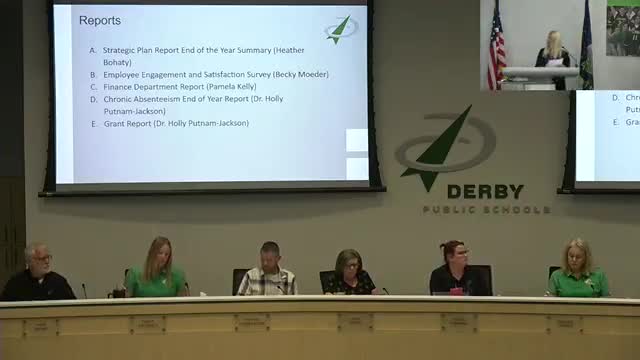
The Derby Board of Education reviewed the district’s annual employee engagement and satisfaction survey and a personnel SWOT analysis June 9 and discussed next steps on compensation, substitutes and other staff supports.
Assistant Superintendent Becky Mader presented the survey summary. The January survey yielded 615 responses—about 51% of employees—down from prior years. Overall agreement measures rose slightly year over year in several categories, and Mader highlighted a 15.6 percentage‑point gain on one district‑level measure tied to compensation and benefits after recent health‑insurance and pay adjustments.
Mader and board members said results show strengths—passionate staff, visible leaders and strong community support—but also recurring challenges: workload sustainability, special‑education capacity, facility constraints, and varied perceptions of trust and transparency in some departments.
Board discussion turned to concrete proposals. Mader and Finance staff recommended raising the daily substitute teacher rate from $120 to $130 and increasing the long‑term substitute rate from $165 to $175; the change would also shift substitute pay from monthly to semi‑monthly to align with classified payroll. The board discussed comparative rates in neighboring districts; the change was presented for a future action item.
Board and staff also discussed tuition and professional‑development supports. Mader said the district offers a negotiated agreement benefit for master’s degree tuition reimbursement and a pathway scholarship for paraprofessionals; the board asked staff to study broader tuition‑assistance options for license renewal and other coursework and return cost estimates during budget discussions.
In other personnel items, Human Resources reported a district SWOC (strengths, weaknesses, opportunities, challenges) analysis that identified trust and transparency concerns in specific departments, financial pressures, substitute shortages and workload strains as key weaknesses; opportunities included program expansion and stronger community partnerships. Board members asked staff to prioritize areas during needs‑assessment and budget workshops.
Finally, staff proposed modest increases to latch‑key weekly fees (ranging from $5–$15 increases by option) and a proposed $10 weekly late fee for delinquent payments; staff said program fees had not been increased since 2011 and that rising costs and reduced grant support have tightened margins. The board heard the proposals as discussion items and did not take final action that evening.