Get Full Government Meeting Transcripts, Videos, & Alerts Forever!
Get email alerts on the School Reconfiguration topic
No spam. Unsubscribe anytime.
District 58 lays out 9‑period plan, staffing steps for shift to 6‑8 middle schools in 2026‑27
Summary
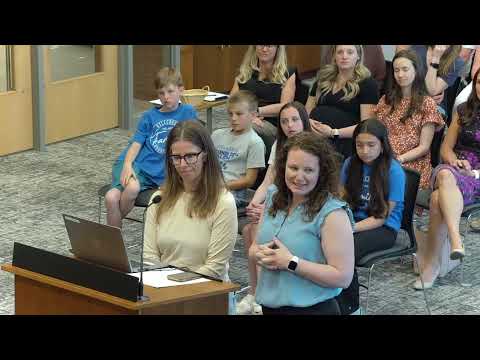
District 58 officials on Monday presented a draft nine‑period bell schedule and staffing plan to guide the district's switch to a 6‑8 middle school model in 2026‑27, with the administration committing to a year of planning, professional learning and additional family outreach before implementation.
District 58 officials on Monday presented a draft schedule and staffing plan for the district's move to a 6-8 middle school model that would take effect in the 2026-27 school year. The administration proposes a nine-period student day, moving advisory to the opposite-lunch period and creating two staff preparation periods while holding total certified FTE steady.
The plan matters because it changes when and how students receive exploratory and intervention time and will require staff reassignments and professional learning. "We have a whole another year to really plan the full implementation of this schedule," Mr. Sissel said during the presentation, noting the district intends to use the coming year to build and test instructional and staffing details.
District presenters said the nine-period day adds roughly 20 instructional minutes to the day under the proposed schedule, shifting start and end times (a sample presented showed a move from an 8:30 a.m. start to 8:20 a.m. and dismissal on Tuesday–Friday from 3:17 p.m. to 3:27 p.m.). Advisory would meet opposite lunch to make space for longer blocks for exploratory classes and targeted student support. The administration emphasized that the model is designed so students would not be pulled from both exploratory periods for intervention: "The one commitment we've made is that we wouldn't want a student to be pulled from both of those periods for academic support," Mr. Sissel said.
Staffing will focus on reallocating current positions rather than adding staff, the presenters said. That reallocation will be concerted: grade-level teachers will move as teams where possible, but related-service staff, specialists and elementary shared positions will require more complex reassignments. The district has started an interest survey for certified staff and plans an "interest solicitation process" in fall 2025 so employees can indicate preferences ahead of 2026-27 assignments. The administration also said it will provide targeted professional learning for teachers making the transition from teaching a full grade to teaching a content area in a middle school schedule.
Special education leaders described a dedicated administrative position that will lead middle-level special education programs, and explained a plan to shift toward student-centered case managers for incoming students with IEPs. The student services subcommittee described flexible models intended to preserve inclusive opportunities and create spaces for calming and life-skills instruction in the new middle schools.
Board members asked for additional analysis and community supports. Member Ellis raised concerns about the short gap between elementary and middle school start times and possible traffic congestion where families drop off at different schools. Members also asked about gifted and accelerated math placement, certification of teachers moving to middle school roles, and how exploratory offerings and extracurriculars will be preserved for students who need interventions. The presenters said some accelerated math and gifted arrangements will move earlier (for example, some acceleration that now happens in grade will take place one year earlier) and that the district is planning to continue offering gifted ELA classes as the configuration changes.
There were no formal board votes on the schedule at the meeting; the presentation was informational and the administration said the next steps are to finalize templates, continue staff and community input, and "live" the tentative schedule during the 2026-27 year and refine it afterward. The board approved the consent agenda later in the meeting, which included a personnel report recalling 21 certified staff members; the presenters said staffing confirmations will continue to depend on final enrollments.
The district asked boards and families to expect more communications, including curriculum-night materials, counselor visits, parent FAQs and transition events (for example, "Sneak Preview" visits hosted by the Downers Grove District 58 Education Foundation) to familiarize families and students with the new middle schools.
Implementation risks identified by presenters included dependencies on final enrollment numbers, transportation coordination, and staff certification; presenters described those risks as part of ongoing planning rather than resolved decisions.
Board discussion and staff responses signaled continued work in the coming year on certification plans, detailed staffing trackers and clarifying how interventions and exploratories will operate in practice.