Get Full Government Meeting Transcripts, Videos, & Alerts Forever!
Get email alerts on the Zoning Land Use topic
No spam. Unsubscribe anytime.
St. Albans council adopts wide-ranging land development regulation amendments to align with new state rules
Summary
The City Council approved a package of land development regulation amendments that update zoning terms, lot-size requirements, parking standards and demolition review to comply with recent state law and rule changes.
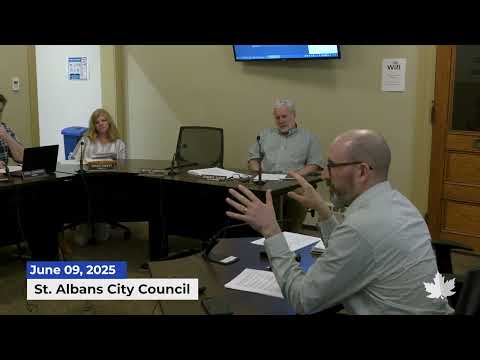
The St. Albans City Council voted to adopt a package of amendments to the city’s land development regulations after a reading and staff presentation, city staff said during the meeting.
The changes replace the term “family” with “household,” reduce a residential district minimum lot size from 9,500 square feet to 8,700 to match state limits, add new defined terms (including a definition of “historic structure” tied to 1967), allow higher densities such as triplexes and fourplexes where single-family homes are allowed, and lower maximum parking requirements to 1.5 spaces per dwelling unit in line with new state rules. Chip said, “we are just gonna go with the word household” to reflect the state’s limits on treating related versus nonrelated occupants differently. Chip also said the city is defining historic structure using 1967 as the cutoff tied to the Saint Albans National Register historic district update.
Chip, the staff presenter, told councilors the package includes 22 individual amendments that together reorganize and consolidate sections—moving exemptions and limits into Article 9, renaming planned unit developments to “transitional lot development,” putting limits on conditions the Design Review Board can impose, and introducing a 120-day timeline for the Development Review Board to warrant a hearing on a complete application to match state requirements. “We’re getting everything into our permanent zoning,” Chip said, adding that changes largely reflect state rule changes the city must implement.
Council members asked for clarifications about boarding houses, small-lot development and off-street parking. Chip said the city regulates a “lodging house” use separately and that the city is still reviewing how to handle situations where rooms are rented in buildings that resemble single-family homes. On the so-called existing-small-lot rule, Chip said the city intends to interpret the rule so it applies to undeveloped lots and not as a pathway to incrementally intensify already-developed small lots.
On demolition and downtown parking, the council discussed a revised rule that discourages demolishing buildings for surface parking in the Central Business District but allows exceptions when demolition is necessary for a redevelopment project that benefits a historic building, a city project, or where the demolition was anticipated through an existing legal interest. Chip said that discussion informed why the city set 1967 as the historic-structure date.
After the presentation and questions, a councilor moved adoption of the amendments. The council voted in favor; the motion carried.
The amendments will be codified into the city’s land development regulations and staff said they will publish the revised text and proceed with the implementation steps described during the reading.