Get Full Government Meeting Transcripts, Videos, & Alerts Forever!
Get email alerts on the Community Outreach Transition topic
No spam. Unsubscribe anytime.
Bridges to the Future logs hundreds of one‑on‑one supports but public event turnout lagged expectations
Summary
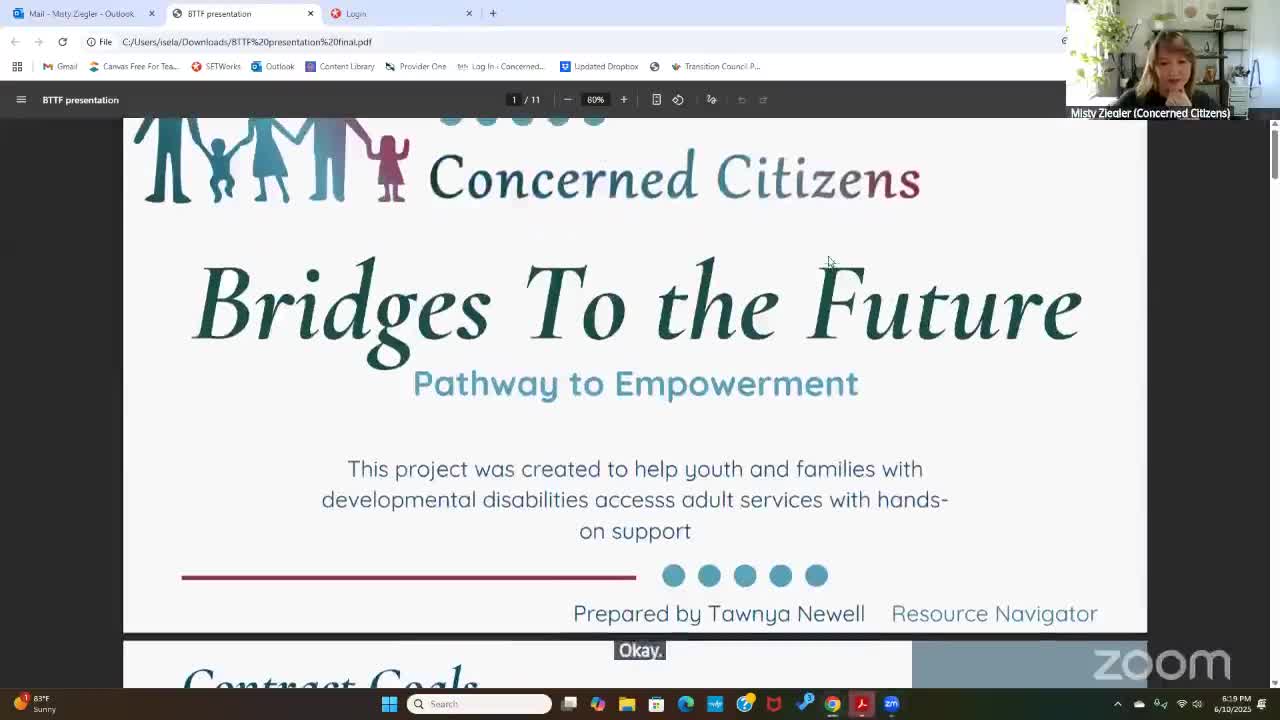
Concerned Citizens’ Bridges to the Future project reported 380 one‑on‑one service interactions and agency partnerships, but organizers said public event attendance was lower than expected and recommended shifting to smaller, targeted events and stronger follow‑up.
Concerned Citizens staff told the Clallam County DDAC that their Bridges to the Future outreach project logged more than 380 individual service interactions—helping families with Social Security applications, transportation, housing referrals, voting registration and other practical needs—even as public event turnout remained below expectations.
Why it matters: The project’s mix of agency collaboration and one‑on‑one navigation highlights the distinction between awareness events and the sustained support families often need to move forward.
Tanya (Concerned Citizens) summarized year‑one results: the project hosted seven outreach events and invited 39 agencies; 24 agencies participated. Organizers tried thematic and giveaway‑driven events (costume contests, raffles, donated local gift cards) but found that attendance was strongest when events were attached to built‑in audiences such as school functions. The team said that hands‑on assistance and follow‑up were critical: families often needed more than brochures and valued in‑person help after events.
Project staff said the low public turnout at standalone events prompted plans for a different approach in 2025: smaller, topic‑focused sessions (for example, Social Security help nights), RSVP‑based invitations, and stronger follow‑up with attendees. Staff noted that agency collaboration and referral relationships were a major program strength.
What’s next: The project will refocus on smaller events, tie outreach to existing public audiences, and prioritize daily, individualized supports that bridge the gap between a one‑time event and sustained service navigation.