Get Full Government Meeting Transcripts, Videos, & Alerts Forever!
Get email alerts on the Public Safety Police Budget topic
No spam. Unsubscribe anytime.
Portsmouth police and council debate funding strategy as staffing gaps drive overtime
Summary
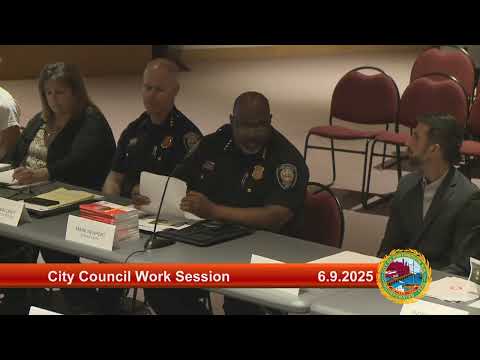
Chief Mark Newport, Portsmouth chief of police, told the Portsmouth City Council and Police Commission during a June 9, 2025 work session that the department needs a minimum of 70 sworn officers to allow regular time off and reduce overtime costs.
Chief Mark Newport, Portsmouth chief of police, told the Portsmouth City Council and Police Commission during a June 9, 2025 work session that the department needs a minimum of 70 sworn officers to allow regular time off and reduce overtime costs.
"Eighty‑six percent of our budget is comprised of staffing," Newport said, adding that officers "are not widgets" and that understaffing increases risk to officer health and operational resilience.
The discussion centered on two linked problems: persistent vacancies that department leaders say require overtime to meet minimum staffing, and differing views among commissioners and councilors about when the city should fund additional positions. Newport cited a staffing study and department data showing that when the force falls below 70 officers, remaining officers must work additional shifts and overtime rises.
Newport told the group the department recorded 11,515 hours of outside details in February 2024, which equates to roughly 5.5 full‑time positions; an auxiliary force covered about 6,100 of those hours, leaving roughly 5,400 that officers were expected to fill and 1,200 hours that went unfilled. The department estimates detail revenues of roughly $341,000 that were not realized because it lacked available officers to staff events.
Commission and council questions probed alternatives. Chair Coyle (Police Commission) emphasized the political limits of the council and commission working together on a long‑term guarantee, saying the council cannot bind future councils: "It could be a council that comes in and says we need to half the size of the police force. We have no ability to, you know, compel future councils to do whatever it is that we want." Councilors repeatedly asked for clearer overtime versus staffing matrices showing how filled positions (not merely budgeted positions) would reduce overtime.
Councilors and commission members debated two practical approaches. Some members, including Chair Coyle, urged that the commission recommend increases in roster size only when hires are likely to be accepted—so offers would not be contingent on late council votes that might cost candidates other opportunities. Others argued funding positions sooner is the best way to reduce recurring overtime costs and related wellness impacts on officers.
Finance staff (Nathan) told commissioners there may be salary savings in the current operating budget that could be used to cover new hires without an immediate supplemental appropriation. Newport said the department staggered some hires and delayed a technology purchase (a records/RMS system budgeted at about $161,000) to meet a citywide 2.9% budget target; adding cybersecurity and restoring the RMS would raise the department's requested increase to roughly 4.95% in one scenario.
No formal vote or appropriation occurred at the work session. Participants agreed to continue discussions, to provide the overtime/year‑to‑date payroll comparisons requested by councilors, and to schedule additional meetings with the Police Commission as the budget process continues.
Next steps include the Police Commission continuing to monitor hires in the pipeline, the finance team confirming available salary savings, and the council and commission scheduling regular work sessions so the staffing, overtime and police station planning are discussed before the formal budget vote.