Get Full Government Meeting Transcripts, Videos, & Alerts Forever!
Get email alerts on the Canned Tuna Ceviche topic
No spam. Unsubscribe anytime.
Cooperative Extension showcases canned tuna ceviche as a food-safe, affordable recipe
Summary
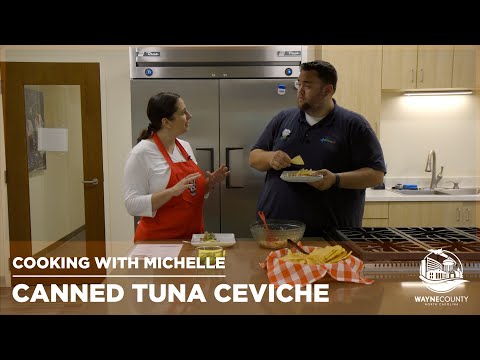
On the Cooking with Michelle program, Cooperative Extension Director Michelle Estrada demonstrated a canned tuna ceviche recipe, highlighting food-safety concerns with raw ceviche, simple preparation steps, nutrition facts and local farmers market hours.
Cooperative Extension Director Michelle Estrada demonstrated a canned tuna ceviche recipe on the Cooking with Michelle program, saying the dish is a “healthy” and “affordable” alternative to raw fish ceviche and noting steps to reduce food-safety risk. The episode, hosted by Joel Gilley, walked viewers through ingredient preparation, seasoning, and a 20-minute refrigeration step before serving.
Estrada framed the recipe as a safer option after discussing food-safety guidance about raw fish. “At your own risk,” she recounted a food-safety specialist telling her about raw ceviche; she recommended canned tuna because it is cooked and “we don't have to worry about that.” Estrada also described the dish’s flavor balance and preparation tips, including rolling limes to release juice, marinating chopped red onion in lime juice, removing tomato seeds, and removing jalapeño seeds to reduce heat.
The segment provided specific recipe and serving information. Estrada said the recipe yields four servings (about three-quarters of a cup per serving) and listed nutrition estimates shown on-screen: about 153 calories per serving; total fat 8 grams with 1.5 grams saturated fat; sodium about 187 milligrams; carbohydrates about 8.5 grams; fiber 3 grams; total sugars 1 gram; and protein 15 grams. The hosts mixed canned tuna, lime juice, red onion, cilantro, tomato, jalapeño, salt, pepper and olive oil, then covered and chilled the mixture in the refrigerator for 20 minutes before tasting.
The episode included serving suggestions. Estrada said the ceviche can be eaten with avocado, on tostadas or with chips, and she recommended using garden-grown herbs and tomatoes when available to keep the dish affordable. She noted that fresh jalapeños are preferable but that canned jalapeños may be used when fresh are unavailable. The hosts also added a small amount of hot sauce by preference; Estrada advised viewers that the number of drops is optional.
Estrada briefly promoted the Cooperative Extension’s farmers market schedule for summer: Thursdays 9 a.m.–3 p.m., Fridays 9 a.m.–6 p.m. and Saturdays 9 a.m.–3 p.m., and said viewers can check the extension’s online pages for current hours. The episode closed with the hosts inviting viewers to contact the Cooperative Extension with recipe questions or requests.
The program contained no formal votes or policy actions; it was a demonstration and public information segment.