State Authority Schedules Mount Hope Bridge overlay, outlines cable dehumidification plan and E‑ZPass fixes
Loading...
Summary
The Rhode Island Turnpike and Bridge Authority told Portsmouth officials it will micro-grind and apply an ultra-thin bonded overlay to the Mount Hope Bridge and is moving forward on a federal‑supported cable dehumidification project while also expanding customer support for E‑ZPass problems.
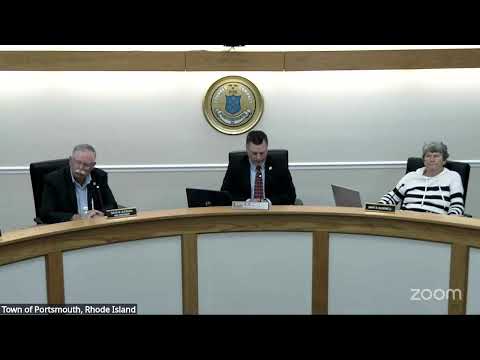
The Rhode Island Turnpike and Bridge Authority told the Portsmouth Town Council on June 9 it will perform a surface overlay on the 96-year-old Mount Hope Bridge and pursue a longer-term full deck replacement and a cable dehumidification system.
"We certainly would not do work before July 4," Laurie Karen Silvera, executive director of the authority, said. She said crews will micro-grind between one-half and three-quarters of an inch of the existing top material and then install an "ultra thin bonded overlay" — a polymer-modified asphalt laid with a controlled screed — intended to restore ride quality. The authority and its contractor expect to work lane by lane and have budgeted roughly 30 hours per lane for the milling and overlay operations.
Engineering director Eric Seabury described the technical approach: a micro-grinding pass followed by patching and then the ultra-thin bonded overlay. "It's a special paving machine that comes in with a polymer based asphalt material, very fine aggregate, and it lays it down," he said. The authority told councilors it may close the bridge for a short, concentrated period (they discussed an approximately 72-hour closure window as one option) or perform full closures over successive weekends to shorten the overall disruption.
Silvera said the authority has completed cable-airflow testing and has an RFQ for a consultant to study a full deck replacement; bids for the dehumidification construction are due July 9. She said the dehumidification effort has a federal PROTECT grant award of $17,000,000 and that the dehumidification system would be commissioned to keep cable humidity at about 40 percent to arrest corrosion. "It's an air conditioning system for a suspension bridge," Seabury said, describing air-conditioning plant rooms, injection and exhaust ports, sensors and an airtight wrap for the cables.
Councilors pressed the authority on safety and timing. Councilor Payero asked whether the bridge is safe; Silvera said a recent inspection produced typical findings for a bridge of this age and that the structure is safe. Councilor Reese and others asked whether the authority had traffic counts and whether work could be staged at night; officials said work will be both day and night and that the authority will coordinate with police and fire for public-safety logistics.
Silvera also addressed recurring customer complaints about E‑ZPass billing that the authority is trying to fix. She said walk-in centers and phone lines are taxed by a high volume of calls and by scam text messages that prompt customers to call. "We do not text you for payment. We will never do that," she said, and encouraged customers to email the authority's customer-service address and noted a $10 transponder replacement cost. She said some transponders purchased in 2008–2009 have dying lithium batteries and recommended replacement; the authority has supplied handheld transponder testers to several AAA offices to reduce customer trips to Jamestown.
The authority said the overlay may occur after July 4 or after Labor Day, depending on coordination with municipalities, major events and the university academic calendar. A complete deck replacement is on a longer capital schedule and will be studied with a consultant; some options discussed include phased weekend replacements or temporary superstructure sections.