Get Full Government Meeting Transcripts, Videos, & Alerts Forever!
Get email alerts on the Opioid Settlement topic
No spam. Unsubscribe anytime.
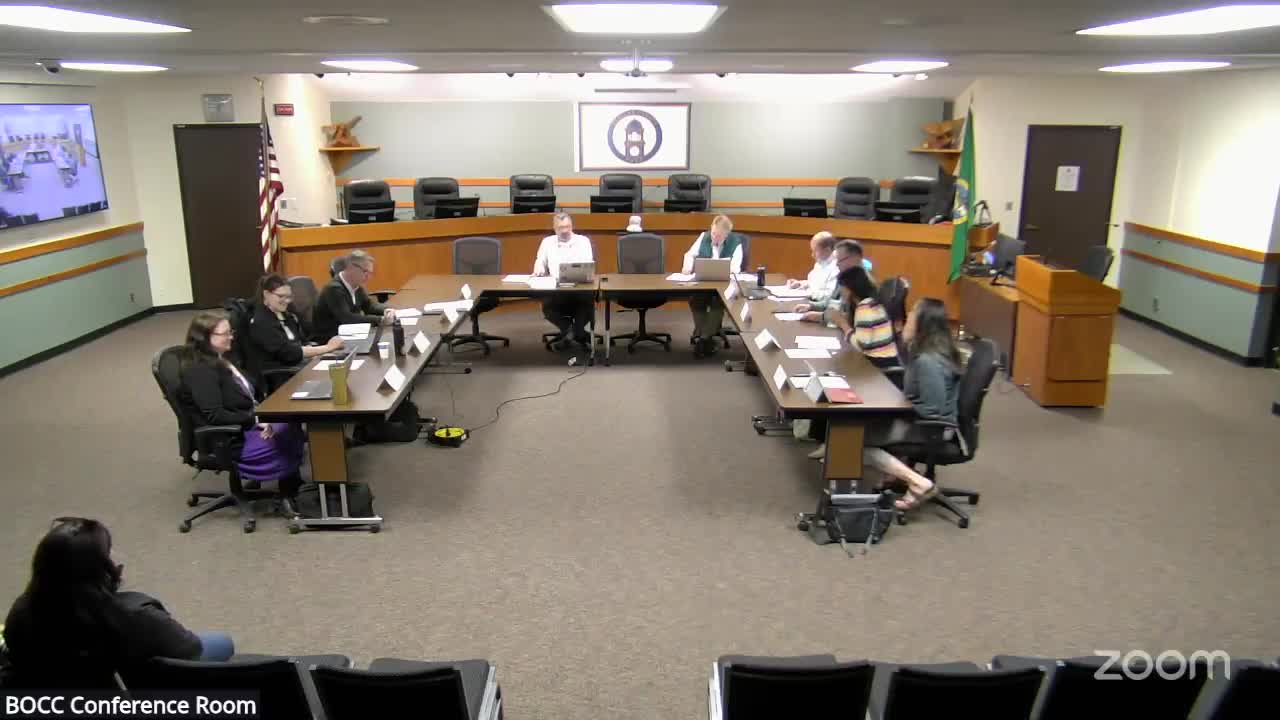
Clallam County board discusses priorities for opioid settlement dollars, no spending decisions made
Summary
The Clallam County Board of Health reviewed a draft gap analysis for spending opioid settlement funds and debated priorities including harm-reduction services, housing, and backfilling services if Medicaid coverage is cut; no formal allocations or motions were adopted.
Board of Health members and staff spent the meeting reviewing a draft gap-analysis intended to guide how Clallam County might spend opioid settlement funds, but they did not adopt any spending decisions or formal priorities.
The board’s discussion centered on a staff-prepared list of existing programs mapped to the settlement’s core strategies and on gaps that could be addressed with settlement proceeds. Board members and staff debated whether to prioritize sustaining existing services, seed new programs, or reserve funds for needs that will be clearer later. Staff said some settlement dollars have already arrived and are currently held while a process for distributing additional funds is developed.
Why it matters: settlement money is limited and local leaders want to use it where it will most reduce overdose harms and support people in treatment. Board members noted an uncertain state funding and Medicaid picture that could sharply increase local demand for treatment and wraparound services.
Key points and context - The document presented organizes potential uses under the settlement’s core strategies (prevention, treatment, harm reduction, etc.) and lists local programs already operating under those categories. Staff described the document as a “live” draft that board members and advisory groups can edit. - Board members agreed the Harm Reduction Health Center (HRHC) is a high priority, but they also emphasized that other existing services will likely face funding shortfalls and warned against treating the HRHC as the only funded priority. The board did not formalize a funding allocation. - Several members raised housing—specifically transitional and supportive housing for people in recovery—as a priority gap, and discussed the risk that expanded Medicaid eligibility could be reduced; one speaker referenced reports that some local health systems expect a substantial share of clients could lose coverage (the transcript referenced a county health official’s estimate that as much as 25% of one provider’s Medicaid population could be affected). Board members said funds to pay for services for people who lose coverage could consume a large share of settlement dollars. - Law-enforcement–related responses and co-responder proposals were discussed as potential uses; board members noted existing co-responder models where social-work positions are funded by behavioral health providers while law enforcement supplies officers. Some participants suggested funding dedicated officers for substance-use response, while others said the social-worker side is more commonly the funded component. - The Behavioral Health Advisory Board is expected to continue reviewing the draft and to provide recommendations; staff said the advisory board’s next full meeting will be in July (July 8 was mentioned). The Board of Health agreed to invite the advisory board into further joint discussion to refine priorities. - Staff described multiple execution options: (1) use an existing administrative partner (the region’s ASO/behavioral health administrative entity) to administer funds; (2) run a request-for-proposals (RFP) process once priorities are set; or (3) segment funding (spend some now, reserve some for later rounds) to account for future unknowns.
What the board directed (discussion vs. decision) - Discussion-only: The board reviewed program lists, identified gaps (housing, neonatal abstinence treatment, local residential treatment for women with children, teen treatment), and debated options for sequencing funds. No formal motions to expend funds or adopt a prioritized list passed during the meeting. - Direction to staff: Staff were asked to keep the draft document live, solicit input from the Behavioral Health Advisory Board and service providers, and return with recommendations. Board members were invited to add items to the shared document or email staff with priorities. - Future action anticipated: Staff indicated an RFP or formal proposal process will be used once the board and advisory group set priorities; final allocations would be forwarded to the Board of County Commissioners for approval.
Ending: Board members emphasized urgency but also cautioned against rushing a process that could leave people without services if the county commits funds before other state or federal decisions are clear.