Get Full Government Meeting Transcripts, Videos, & Alerts Forever!
Get email alerts on the Library Funding topic
No spam. Unsubscribe anytime.
Shelton council debates library costs, building ownership and long‑term funding
Summary
Council members discussed whether the city should continue covering facility costs for Timberland Regional Library, including utilities, custodial services and insurance, and whether the library could assume building ownership or other responsibilities to reduce the city’s roughly $405,000 annual contribution.
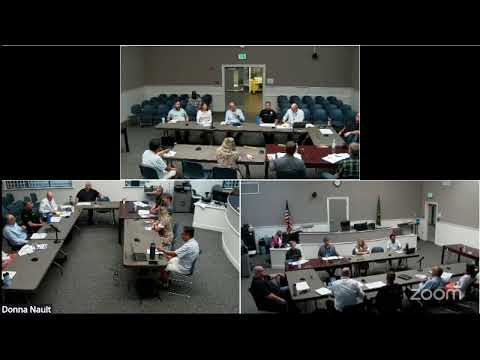
Shelton City Council members debated the city’s financial role in the Timberland Regional Library building and operations during a June 10 budget work session, with staff and council exploring options that range from maintaining current support to asking the library district to assume more direct building responsibilities.
City Manager Martin Figler said the city’s current contribution for the library is about $405,000 this year, a figure that reflects both ongoing operations and capital repairs. He said recent one‑time improvements (roof/ HVAC work) made this year inflate the total; without the big repairs the recurring cost is about $132,000. Timberland Regional Library Executive Director Cheryl Haywood spoke separately to staff earlier and told staff the district is facing similar budget pressures.
Several council members voiced strong support for keeping library service levels. One council member said, "Other than police and emergency services, the one thing that I do not want to cut...is the library," describing it as a community resource used seven days a week for programs, quiet space and services to children and families. Another council member suggested the council could ask the library district to take on building ownership with deed restrictions to preserve museum or library use; staff cautioned that the multi‑county district’s levy structure and operating model make that option complicated.
Staff identified possible near‑term changes to reduce city costs: have the library district assume custodial duties and utilities, negotiate a change to the interlocal agreement (ILA), or explore using LTAC or other grant sources for specific capital work. Staff noted that donations can be designated for a service but still route through the city general fund.
No action was taken. Council asked staff to return with more detailed line‑item costs (utilities, custodial FTE equivalents, insurance and professional services) and options for negotiating the interlocal agreement ahead of fall budget work.
The council also discussed the broader principle that the city’s contribution buys a service that residents already pay for through the library district’s levy; some council members warned that shifting costs without securing alternative service commitments could leave residents paying for a service they no longer receive.
The topic will return to council with clearer fiscal detail and options for a path forward before formal budget adoption.