Get Full Government Meeting Transcripts, Videos, & Alerts Forever!
Get email alerts on the Animal Shelter topic
No spam. Unsubscribe anytime.
Shelton council weighs shelter cuts, outsourcing and holding-period changes amid budget shortfall
Summary
Council and staff reviewed options for the city-run animal shelter — including outsourcing to a humane society, shortening mandatory holding periods, and shifting animal-control duties — after staff said costs and length-of-stay have risen sharply since the COVID period.
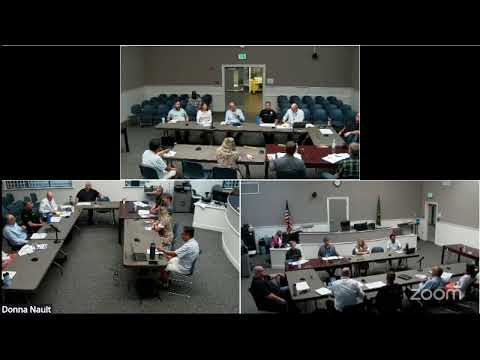
Shelton City Council members on June 10 discussed several ways to reduce costs at the city-run animal shelter, including contracting operations to a humane society, changing holding-period policy, or moving animal-control duties within city departments.
Staff member Jay Harris said the shelter shifted from the police department to community development a few years ago and that post‑COVID changes among partner organizations left the city taking more animals and more medical cases. "The shelter ... is a public service," Jay said, noting that staff and medical bills have grown. Jay told the council the city’s per‑dog cost averages about $35 per night and that two long‑stay dogs had cost roughly $19,000 since last fall.
The council heard three broad options: keep the shelter and accept higher operating costs; reduce length of stay or tighten euthanasia policy to lower costs; or outsource shelter operations under contract. Jay said contracting with a humane organization discussed with staff could reduce the city’s direct shelter operating costs by roughly $60,000–$70,000 a year but would also shift adoption revenue and mean the city would cede direct operational control. He said outsourcing could also pass medical‑care decisions and intake priorities to the contractor.
Several council members pushed back on a proposal to adopt a 72‑hour stray holding period. A council member said she would "definitely not" support 72 hours and called that time frame "crazy." Staff pointed to Washington State law that sets minimum holding obligations for animals (72 hours for confirmed strays; 14 days when ownership is known) and warned that shorter mandatory holds would carry policy and legal implications.
Council members also discussed whether animal‑control responsibilities should remain a city function or be shifted to the police department or county. Staff said the county has limited animal‑control capability and that the city is not statutorily required to provide animal control the way the county is. The council asked staff to refine the outsourcing option (labeled "Option 2") and to return with more detail on likely cost savings, lost revenue from adoptions, and operational impacts on police response times.
The discussion included possibilities for community fundraising, designated donations, or establishing a shelter friends‑group to raise restricted funds. City staff noted that donations can be designated for a service but must pass through the city general fund.
No formal council action was taken; staff were directed to develop more detailed cost comparisons and program options for future budget deliberations.