Get Full Government Meeting Transcripts, Videos, & Alerts Forever!
Get email alerts on the Corrections Health topic
No spam. Unsubscribe anytime.
County proposes combined clinical services model for jail and juvenile detention to capture Medicaid reimbursements
Summary
County staff and providers discussed a proposed shared clinical services model that would combine medical and behavioral health coordination for the jail and juvenile detention, aim to bill Medicaid for eligible care, and create new county clinical positions; juvenile court and TrueStar leaders urged safeguards for youth outpatient services.
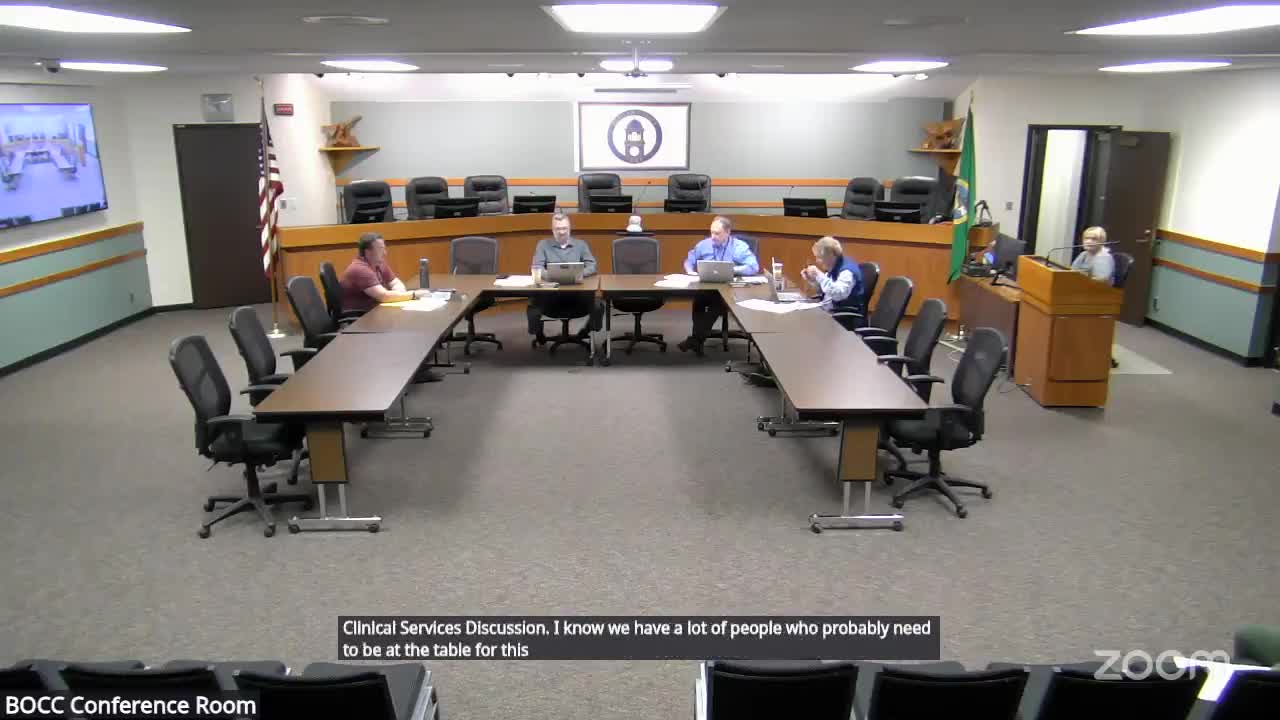
Clallam County staff presented a proposed combined clinical services model intended to coordinate medical and behavioral‑health care for people in county custody, capture Medicaid reimbursement, and create dedicated care‑coordination positions to improve transitions back into the community.
County administrators said the model is designed to meet requirements in the Washington State Health Care Authority (HCA) Medicaid transformation grant and to reduce the county’s general‑fund costs for jail medical and behavioral health. The proposal calls for a clinical director and two reentry care coordinators/targeted case managers, funded in part by HCA grants, and a shared team that can dispatch to either the jail or juvenile detention facility as needs require.
Why it matters: county officials said jail medical and related services represent one of the sheriff’s largest expenditures and that enrolling eligible people in Apple Health (Medicaid) and billing appropriately could shift substantial costs away from the county’s general fund. Staff described the model as novel for the state because it would merge both behavioral‑health and medical services across juvenile and adult carceral settings while keeping clinical licensing and community partnerships intact.
Key points and concerns: staff said the model would preserve immediate, barrier‑free crisis response for people in detention while using community partners to continue care after release. Dr. Monaghan (county physician) and nursing staff advised that a clinical director should have a medical background to supervise nursing and compliance functions. Staff recommended exploring third‑party billing services to manage claims and denials.
Representatives of TrueStar (the county’s long‑running juvenile behavioral health program) and the juvenile court emphasized the importance of retaining outpatient and early‑intervention services for youth. Judge Barnhart and TrueStar leaders said the county’s juvenile outpatient program provides immediate, barrier‑free crisis care and community‑based services that the court relies on; they cautioned that moving staff or programs must not remove services youth need outside detention.
Operational matters and next steps: staff said civil‑service rules apply because many clinical staff will work in the sheriff’s facility and that an interlocal or memorandum of understanding will be needed to document supervision, evaluations and the shared responsibilities among the sheriff’s office, juvenile services and the county. The board directed staff to post the HCA‑funded positions and to build a financial model using the two HCA grants; staff also proposed forming a stakeholder coordination group to monitor transitions and address holes as they arise.
No final vote was taken. County managers said the budget and implementation details — including how existing juvenile staff roles and funding streams would be realigned — will return to the board for review. TrueStar and juvenile court leaders asked for a transition plan that preserves outpatient services for youth and for continued participation in planning by court, juvenile services, TrueStar and law enforcement.