Get Full Government Meeting Transcripts, Videos, & Alerts Forever!
Get email alerts on the Fleet Management topic
No spam. Unsubscribe anytime.
County approves $2.02 million sheriff’s vehicle order; sheriff updates commissioners on EV pilot and charging challenges
Summary
The Board approved a $2,023,591 purchase agreement for multiple vehicles for the sheriff's office and delegation authority to the county manager. Sheriff’s Office briefed commissioners on a two‑vehicle EV pilot, charging limitations and usage patterns that favor administrative vs. patrol deployment.
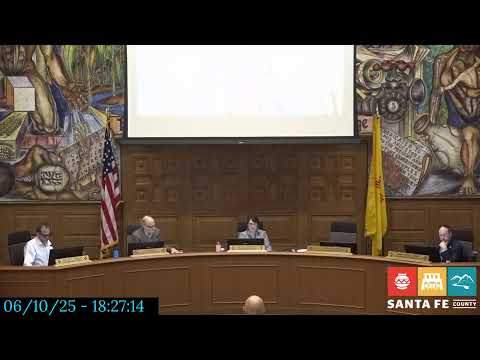
Santa Fe County — The Board of County Commissioners approved June 10 a multiple‑term price agreement to buy vehicles for the Santa Fe County Sheriff’s Office, authorizing cooperative purchasing with Olaf Ford for a total not‑to‑exceed amount of $2,023,591, county staff said.
Commissioner Justin Green moved to approve the purchase; Commissioner Hank Hughes seconded and the motion carried. The contract authorizes the county manager to sign purchase orders under the cooperative purchasing agreement.
During discussion, Commissioner Green asked about county plans to incorporate electric vehicles (EVs) into the fleet. Sheriff’s Office staff described a small pilot that placed two EVs in service after chargers were installed March 3, 2025. The Sheriff said the vehicles have been used for recruiting events, civil process work and limited patrol duty, noting one vehicle ran roughly four to six hours while used for patrol duties and lasted a full administrative shift when used for civil process or recruiting.
The sheriff told commissioners that level‑2 chargers at the office take about 10 hours to fully recharge a depleted vehicle and that the current infrastructure supports two vehicles. He said the county will need additional charging infrastructure and planning before deploying EVs in patrol duties that require extended shifts and high‑mileage response work. The sheriff added that electric patrol vehicles appear more practical for administrative and civil‑process functions than full patrol duty until charging and vehicle performance concerns are resolved.
Why it matters: The purchase funds routine fleet replacement for public safety operations. The EV pilot update highlighted infrastructure limits that the county must address if it wants to shift more patrol work to electric vehicles.