Get Full Government Meeting Transcripts, Videos, & Alerts Forever!
Get email alerts on the Public Safety topic
No spam. Unsubscribe anytime.
Professional paramedics urge Fall River council to recognize EMS as public safety; councilors pledge support, urge interdepartmental cooperation
Summary
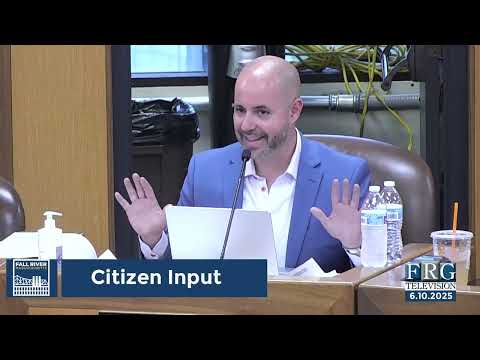
Justin Teixeira, president of the Professional Paramedics of Fall River, asked the council to classify EMS as a public‑safety department, citing clinical complexity, occupational hazards and grant access; councilors said they support recognition but urged better coordination with the fire department.
Justin Teixeira, president of the Professional Paramedics of Fall River, urged the city council to recognize emergency medical services as a public‑safety branch with parity to police and fire, saying the change would align legal status with EMS’s clinical role and help secure grant funding and occupational protections.
“We are clinicians, incident commanders, mental‑health providers, public‑health liaisons and frontline guardians of life,” Teixeira said during citizens’ input time. He described daily exposures to blood‑borne pathogens, infectious disease and violence and asked the council to “stand with us” by granting public‑safety designation that would open additional funding streams and protections.
Councilors responded with broad verbal support for EMS’s professional role. Councilor Citzick thanked Teixeira for his email and meetings and noted prior council votes that had improved EMS compensation and classification steps taken in previous years. “We did that,” Citzick said, referencing past council action to adjust EMS pay and classification. He also urged EMS and the fire department to resolve operational tensions and improve coordination, saying interdepartmental conflict would harm the city’s ability to deliver services.
Other councilors said poll data and public perception already place EMS in the public‑safety family. Councilor Pereira said most residents would view EMS as public safety and urged collaborative resource sharing between departments.
Councilors did not adopt a formal ordinance or take a direct vote to reclassify EMS during the meeting. Several suggested the issue might be better addressed in committee or elevated to the state level to pursue statutory recognition that would unlock certain grant programs and protections. One councilor suggested convening EMS leaders from across Massachusetts to press for statewide policy change.
Teixeira framed the request as parity, not superiority. “We are not asking for more. We are asking for equal,” he told the council. Councilors thanked him for appearing and pledged to continue conversations with the administration and EMS leadership.