Get Full Government Meeting Transcripts, Videos, & Alerts Forever!
Get email alerts on the Utilities Water topic
No spam. Unsubscribe anytime.
Village hears water‑supply plan; well 6 PFAS levels near upcoming standard
Summary
Engineers told the Village of Hartland board the community has sufficient water supply through 2045 but that sampling at Well No. 6 showed PFAS concentrations close to a forthcoming 4 parts‑per‑trillion standard, prompting contingency planning for treatment or additional well work.
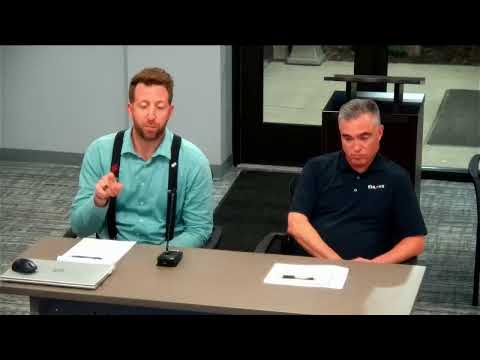
The Village of Hartland held a public hearing Tuesday on a draft 20‑year water supply service area plan that concluded the community’s current water supply and storage are adequate through 2045, but flagged PFAS at Well No. 6 as a future compliance risk.
Dave Arnott, an engineer on the project team, told the board the planning analysis projects a 2045 peak‑day demand of roughly 2.77 million gallons per day; the village’s reliable supply capacity, after applying a safety factor, is about 3.51 million gallons per day. Storage capacity was also described as sufficient for the 20‑year planning horizon.
The plan’s key operational issue: sampling in February 2025 showed total PFAS levels for the main measured compounds at approximately 4.1 parts per trillion at Well No. 6; a subsequent sample read 3.8 ppt. State standards are dropping and the forthcoming limit for the principal PFAS compounds is 4 parts per trillion. Arnott and staff said the village currently meets standards but is close to the new limit and should plan options now.
Options discussed and next steps: staff and consultants outlined short‑ and medium‑term mitigation strategies, including: - Targeted filtration using specialty media canisters sized to the well flow; vendors provide cartridge systems designed for PFAS removal. - Developing and sampling a deeper or nearby test well and blending/dilution strategies to reduce the finished‑water concentration if a new well produces lower PFAS concentrations. - Possibility of treating only a fraction of the well’s throughput as a cost‑saving measure.
Tom (staff member) and Dave Arnott said they are evaluating vendor proposals and the village plans to drill a sample well as part of a lower‑cost investigation route before committing to full‑scale treatment. Officials noted PFAS sampling is measured in parts per trillion and testing and treatment can be significantly more expensive than standard water analyses.
Public hearing and reaction: The board opened a public hearing on the draft plan; no members of the public requested to speak during the hearing. The hearing was closed with no motions taken; staff will collect additional data and return with recommendations as sampling and vendor evaluations proceed.
What the village will do next: Staff said they will test a sample well, obtain vendor information on filtration systems sized to the village flows, and evaluate the cost/benefit of partial treatment versus drilling a new, deeper well.
Direct quotes in the record are drawn from project staff and consultants present at the hearing.