Citizen Portal
Sign In

Tom Lantos Human Rights Commission hears testimony alleging mass rights abuses and transnational repression by Turkish government

3755583 · June 10, 2025

Loading...

AI-Generated Content: All content on this page was generated by AI to highlight key points from the meeting. For complete details and context, we recommend watching the full video. so we can fix them.

Summary

Witnesses at a Tom Lantos Human Rights Commission hearing in Washington described widespread arrests, alleged torture, transnational repression of exiles and proposed U.S. policy responses including a reintroduced Transnational Repression Policy Act and expanded sanctions.

Tom Lantos Human Rights Commission Chairman Chris Smith opened a hearing in Washington to "expose and explore ways to mitigate and hopefully end massive violations of human rights by the government of Prime Minister Erdogan against the people of Turkey." Witnesses and commissioners described mass arrests, alleged torture, restrictions on press and religion, and what panelists called a widening practice of transnational repression against critics abroad.

Panelists said the disclosures matter because Turkey is a NATO ally whose internal policies affect U.S. intelligence, diplomatic cooperation and regional stability. "A NATO ally that rejects democratic norms is not just a moral failure. It becomes a strategic liability," the commission heard. Witnesses urged Congress and the State Department to press for measurable improvements and to consider targeted legal tools.

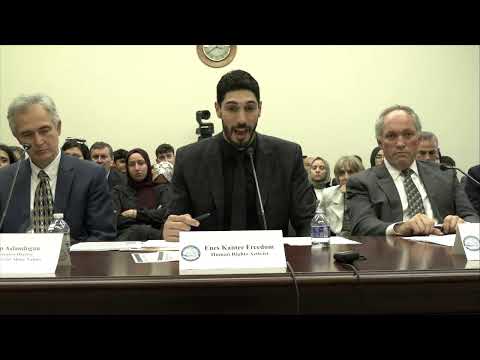
Enes Kanter Freedom, a U.S. citizen and long-time critic of President Recep Tayyip Erdogan, told the commission he and many others have faced arrest warrants, revoked passports and bounty lists. "I speak today not as an NBA player, but also as a survivor of the Erdogan's regime to international repression," Kanter Freedom said. He and other witnesses described cases they said showed harsh prison conditions, denial of medical care and prosecutions for routine activities. Kanter Freedom listed individual cases during his statement, including an Alzheimer’s patient and several teachers and parents he said were imprisoned; he characterized the charges in some cases as "bogus." The witness also said the Turkish government had abused the Interpol system to pursue critics abroad.

Alp Aslandogan, executive director of the Alliance for Shared Values, said the Turkish government had "weaponized counterterrorism laws to silence peaceful critics," and described prosecutions that, he said, used ordinary social or religious activities as evidence of terrorism membership. "The evidence brought for terrorism charges are laughable," he said, noting mass investigations and convictions he said targeted members of the Hizmet (Gulen) movement and other civil-society actors.

Michael Rubin, senior fellow at the American Enterprise Institute, criticized U.S. reliance on Turkish intelligence and called for a formal review. "There must be an intelligence audit to reassess any Turkey-provided intelligence used to designate terrorists or individuals," he told the commission, arguing intelligence from Turkey has been politicized and should not be accepted uncritically by U.S. agencies.

Several commissioners and witnesses urged a range of U.S. policy responses. Smith described plans to reintroduce the bipartisan Transnational Repression Policy Act, saying the bill would require the president to impose property and visa-blocking sanctions on individuals responsible for transnational repression, direct the State Department to develop a strategy to counter such repression, and task other agencies with identifying and helping prosecute perpetrators. The commission also discussed using the International Religious Freedom Act’s designation process, the Global Magnitsky sanction authorities and tighter conditions on U.S. arms sales and intelligence cooperation.

Panelists warned of broader regional effects if Turkey’s internal policies go unchecked. Witnesses described declines in media freedom, restrictions on religious institutions (including claims about the Halki Seminary and the ecumenical patriarchate), and alleged interference in northern Cyprus’ cultural heritage. Several panelists urged Congress to condition bilateral cooperation on measurable human-rights steps and to maintain regular oversight hearings.

The hearing included detailed testimony and documentation from witnesses, and concluded with bipartisan calls for objective, enforceable U.S. actions rather than symbolic statements. No formal votes or committee referrals occurred during the hearing; witnesses and members urged legislative and diplomatic follow-up.

The commission adjourned after receiving testimony and discussing next steps.