Get Full Government Meeting Transcripts, Videos, & Alerts Forever!
Get email alerts on the Employee Benefits topic
No spam. Unsubscribe anytime.
IBB agrees to advance family-insurance white paper and to survey staff on differential funding
Summary
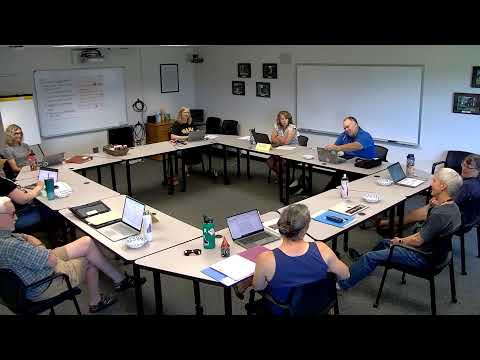
At a June 10 IBB meeting, members approved advancing a white paper on family insurance from a draft ‘straw’ stage to the next white-paper stage and agreed to survey staff in the fall about interest in differential employer contributions tied to household status.
Moscow School District interest-based bargaining (IBB) participants on June 10 approved advancing a white paper on family insurance and agreed to begin the process of surveying staff members about whether the district should explore differential funding models based on household status.
The decision came after Sunu described the group’s prior conversation: “we essentially decided we were going to explore options for changing how we fund family insurance. And it would start with surveying staff members to see if they would be interested in a differential funding model.” The IBB group voted by thumbs-up to move the document out of the “straw” stage and into the white-paper series that will be distributed to the community.
Why it matters: the white paper is intended to frame possible alternatives to the district’s current single, non-differential contribution model. Members discussed two main approaches: (1) providing different district contribution amounts by employee household type (for example, lower single-employee contributions and larger contributions for employees who cover dependents), or (2) keeping equal employee contributions but adding explicit dollars for dependents. Participants noted the second approach risks reducing the overall pool available for base contributions.
Discussion details: IBB members asked that the fall survey include short, concrete examples so respondents understand the options. One member recommended the group finalize survey language at the September IBB meeting so a brief “Are you interested in exploring differential pay models from the district with some examples? Yes/No” question could be distributed, with follow-up work if responses indicate interest. The group discussed timing and whether to delay until October to refine survey details; ultimately they planned to draft survey language in September and distribute it afterward.
Outcome and next steps: the group approved moving the white paper forward and agreed to develop a short staff survey in September. If a majority of surveyed staff indicate interest, the group will return in October to begin detailed work on potential differential models. The document will be incorporated into the district’s white-paper materials for community distribution.
Closing notes: participants emphasized the need for clear explanations in the survey so staff know what they would be voting on. No formal change to district policy or insurance contracts was made at the meeting; the action approved was the advancement of the white paper and the commitment to survey staff.