Get Full Government Meeting Transcripts, Videos, & Alerts Forever!
Get email alerts on the Gaming Regulation topic
No spam. Unsubscribe anytime.
Laramie City Council hears state briefing on pari‑mutuel and skill‑game rules, weighs zoning and downtown impacts
Summary
State and local officials briefed the Laramie City Council on Wyoming gaming law, historic horse racing (HHR) terminals and skill‑based games. Council members discussed zoning options, downtown impacts and next steps including public outreach and potential code changes.
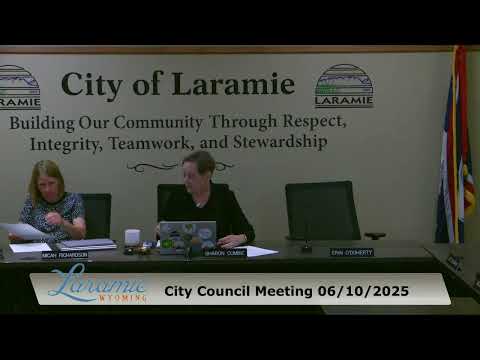
Laramie — Laramie City Council members spent a June 10 work session hearing state and local officials explain Wyoming statutes and agency rules that govern pari‑mutuel wagering, historic horse racing (HHR) terminals, skill‑based amusement games and online sports wagering, and discussed using local zoning and development standards to manage where and how gaming operations locate in Laramie.
The session drew speakers from state and local government. Ashley Harpstrauth, director of the Wyoming Association of Municipalities (WAM), urged local officials to press the Legislature for explicit local approval and renewal authority and told the council “we really want to make sure that there's an approval and renewal and that they are subject to the corporate limits of any city or town.” Nick Laramende, director of the Wyoming Gaming Commission, reviewed the commission’s history, regulatory scope and technical safeguards for HHR terminals. Laramie Planning Director Taney summarized the city’s existing land‑use tools and possible code changes the council could direct staff to explore.
Why it matters: city officials said gaming growth affects public safety, municipal services and downtown character, and it already produces municipal revenue. Council members debated whether to pursue zoning limits, conditional‑use requirements, design standards (for example windows and separate entrances) or to fold public input into the city’s comprehensive‑plan update. Several councilors also asked staff to prepare outreach materials and options for a follow‑up work session.
State framework and agency controls
Laramende described the commission’s statutory authority and inspection regimes. He said Wyoming law and commission rules govern four broad categories available to residents: pari‑mutuel wagering (including live racing and simulcasting/HHR), skill‑based amusement games, online sports wagering and charitable gaming. “Today, there's actually 4 types of gaming that is available to the members of your community,” he said.
Laramende reviewed technical safeguards: HHR terminals must be certified by an independent laboratory (he named GLI Gaming Laboratories International), terminals report cryptographic software signatures and the commission conducts on‑site compliance checks. He said there are 41 operational off‑track‑betting permittees statewide, about 3,034 active terminals in play and roughly 5,500 terminals approved statewide (some machines are approved but not yet placed). He also noted a commission practice of biennial third‑party audits (the Thoroughbred Racing Protection Bureau) of historical race presentation and machine outputs.
Laramende also explained revenue and limits: pari‑mutuel operators remit a portion of the handle, with 1% of the amount wagered allocated to local governments (the commission splits that 0.5% to the county and 0.5% to the city when applicable); skill‑based amusement games are capped at $3 per wager and no more than $3,000 payout per play with a four‑terminal limit per location; online sports wagering is taxed at 10% of operator revenue and a statutory annual allocation (about $300,000 statewide) is set aside for problem‑gaming services administered through the Wyoming Department of Health. Laramende noted a recent large HHR jackpot in Uinta County and that average machine “takeout” rates run about 8%.
Local regulation and zoning options
Taney told the council that Laramie currently groups gaming uses under an “off‑track betting facility” classification and that, except in a few zones where the city requires a conditional‑use review, gaming uses can be permitted without a separate public hearing. “Currently we do regulate gaming through zoning,” Taney said, and added that the city’s development code could be revised to clarify definitions and to establish tailored requirements — for example distance buffers from schools or parks, caps by district, parking and site‑design standards, hours of operation, or special design rules such as maintaining street‑facing windows and separate public entrances for combined uses.
Council debate: downtown character, timing and next steps
Council members expressed two recurring concerns: the social and public‑health impacts of gaming and the effect on downtown commercial vitality. Vice Mayor Richardson and others said destination gaming uses tend to hold customers inside for long periods, potentially reducing the casual walk‑in traffic that supports downtown retail and restaurants.
Council members offered a range of next steps rather than an immediate regulatory change. Several members suggested adding the topic to the city’s comprehensive‑plan update and conducting a targeted public survey and additional work sessions. Planning staff estimated the master‑plan update would run about a year to 18 months of drafting and public input; members said they would like an earlier, narrower examination of downtown zoning and development standards to protect the district’s walkability and windowed storefront character.
Representative Trey Sherwood (R) told the council he is tracking several gaming bills at the state level and offered to relay feedback to the Legislature’s select committee on gaming. “I’m…here to be a resource and to listen and learn to be an advocate for you guys,” Sherwood said.
No formal council action
The work session was informational; the council took no ordinance or resolution vote. Staff said they could prepare zoning‑and‑design options, a short public survey and a recommendation on whether to pursue a downtown overlay or conditional‑use approach if the council wants staff to proceed.
What’s next
Councilors suggested follow‑up items: (1) staff‑prepared zoning alternatives and design standards for council review, (2) a short public survey and broader outreach as part of the comprehensive‑plan process, (3) optional field trips or demonstrations of HHR and skill‑game operations for council members, and (4) continued engagement with the state select committee on gaming. Mayor and staff closed the session after asking for time to consider direction and whether to ask staff to return with draft code language or outreach materials.
Ending: The work session closed with no public comment and no vote; the council moved on to regular updates.