Get Full Government Meeting Transcripts, Videos, & Alerts Forever!
Get email alerts on the Immigration Policy topic
No spam. Unsubscribe anytime.
Pueblo County commissioners table ‘non‑sanctuary’ resolution after heated public comments
Summary
After two competing draft resolutions and an extended public comment period, the Pueblo County Board of County Commissioners voted to table a proposal to declare the county a "non‑sanctuary" jurisdiction and agreed to revisit the item at a later meeting.
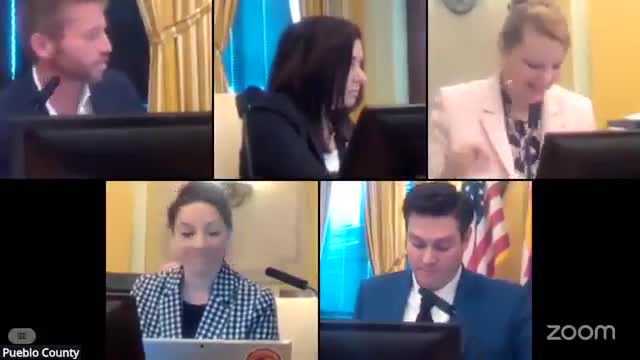
Pueblo County commissioners on June 10 voted to table a resolution meant to declare the county a non‑sanctuary jurisdiction after more than an hour of debate and a packed public comment period.
The action came after Commissioners presented two competing drafts: one drafted for compliance with federal law and another stressing immigrant protections and community values. Commissioner Paula McPheeeters introduced a draft she said was prepared by the county attorney “to comply with federal law,” while Commissioner Miles Lucero read a competing draft emphasizing the county’s history and the need to protect immigrant families.
The dispute centered on two questions commissioners repeatedly raised: whether passing such a resolution would affect federal funding and whether local officials should adopt language that could be read as inviting federal immigration enforcement. Lucero said the U.S. Department of Homeland Security had published and then removed a list that placed Pueblo on a list of sanctuary jurisdictions, and he warned that “to pass this resolution...that’s implying that today, we are not complying with federal law.” McPheeeters said she wanted a clear, express statement so she could answer constituents when asked whether Pueblo County is a sanctuary jurisdiction.
Public comment was long and divided. Supporters of the county adopting strong language that emphasized enforcement and cooperation with federal authorities argued the measure protects federal funding streams; opponents, including immigrant‑rights advocates and residents with personal experience of family separation, said the resolution risked putting community members at heightened risk of detention and deportation. Speakers included Roxy Pignanelli, Patricia O’Brien, Sally Sharp of the Colorado Rapid Response Network, Brianna Guerrero (affiliated with the Colorado Immigrants Rights Coalition), Estela/Estella Reveles, Maribel Sena and others who described personal experiences and urged caution.
Commissioners and staff also discussed the practical status of the DHS list and whether local resolutions in El Paso County and others influenced removal from the list. Debate became heated enough that the chair warned the room repeatedly about decorum, a recess was taken, and the commissioners restricted public‑comment time in the interest of finishing the meeting.
After returning from recess, the board agreed to postpone the item. The commission’s motion to table item 3(d) carried by voice vote; the clerk recorded the motion as carried. The board said it would reintroduce the item at a future meeting (the chair suggested the following Tuesday) to allow additional internal discussion and to seek common language acceptable to the majority.
Why it matters: Commissioners said the resolution could affect federal funding and local relationships with state and federal agencies. Supporters of each approach argued they seek to protect public safety and community stability in different ways. The postponement means no local policy change has been adopted and that further deliberations and possible revision of language will follow when the board resumes the item.