Get Full Government Meeting Transcripts, Videos, & Alerts Forever!
Get email alerts on the Public Safety Police topic
No spam. Unsubscribe anytime.
Police outline staffing, crime‑gun unit and technology upgrades as ShotSpotter debate resurfaces
Summary
Chief Saucier presented a $63.4 million FY26 police budget that includes patrol classes, community engagement patrols, crime‑gun unit work and proposed technology subscriptions; committee discussion reopened a request for independent research on ShotSpotter efficacy.
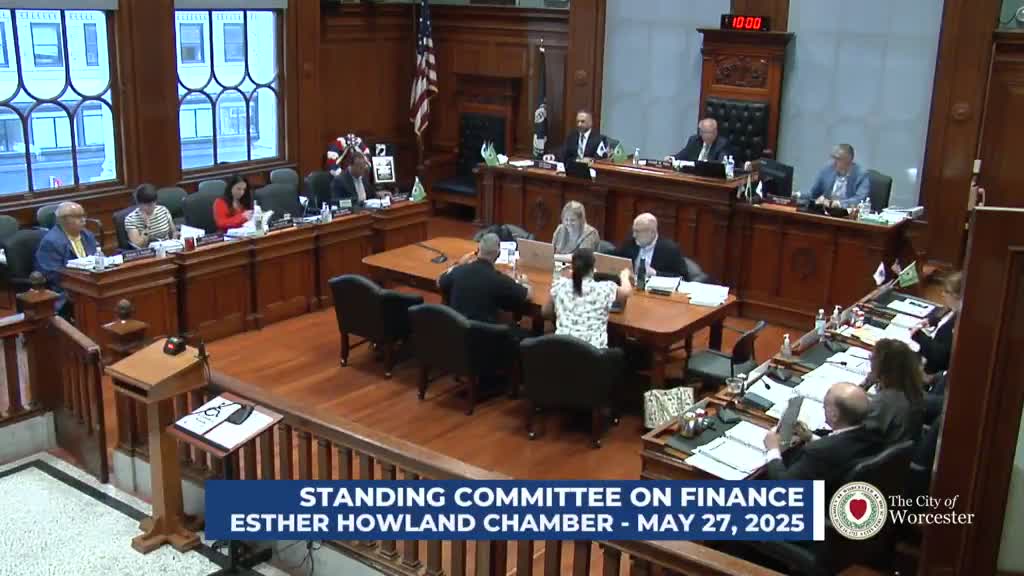
WORCESTER, Mass. — Police Chief Saucier told the finance committee on Tuesday the Worcester Police Department’s FY26 recommended appropriation is about $63,400,000, a 4% increase driven mainly by COLAs and step increases, modest regrades and safety equipment purchases.
The chief described several operational priorities: continuing community engagement patrols that require officers to leave their vehicles for 30 minutes per shift to walk and meet residents when not on calls; expanding the Crime Gun Intelligence Center that investigators say has led to arrests and recovered firearms; an upcoming summer impact deployment tied to crime‑analysis hot spots; and continued recruit classes (18 recruits graduate in June with another class planned for January).
Committee members questioned the department about body‑worn camera policies, redaction processes, informant funds and settlements. Chief Saucier said department policy requires recording unless a discrete need to mute or pause is present (for example, to protect a victim’s private information), and that redaction and settlement oversight are handled in coordination with the law department. He described an internal training push, including a recent in‑house civil‑rights and community policing training for hundreds of officers led by an outside expert.
A recurring public debate returned during the hearing: the ShotSpotter acoustic gunshot detection system. Chief Saucier said ShotSpotter helped the department follow up on shots‑fired calls and recover firearms, and committee members voted to request an evidence‑based report on ShotSpotter’s local efficacy and impacts. The committee also asked for a public dashboard covering policy reforms and equity audit follow‑ups; the city manager said draft dashboards are in review and the administration expects to publish them to the public in the near term.
Why it matters: The police budget funds patrols, technology and investigative units that aim to reduce shootings and support community policing. The round of questioning and the committee’s vote for a ShotSpotter efficacy report indicate ongoing interest in evaluating the costs and benefits of acoustic detection technology and transparency measures tied to the DOJ and equity audit recommendations.
What’s next: The finance committee advanced the police appropriation and asked the administration to provide the requested research and dashboard materials prior to final council action.