Get Full Government Meeting Transcripts, Videos, & Alerts Forever!
Get email alerts on the Public Safety Fire topic
No spam. Unsubscribe anytime.
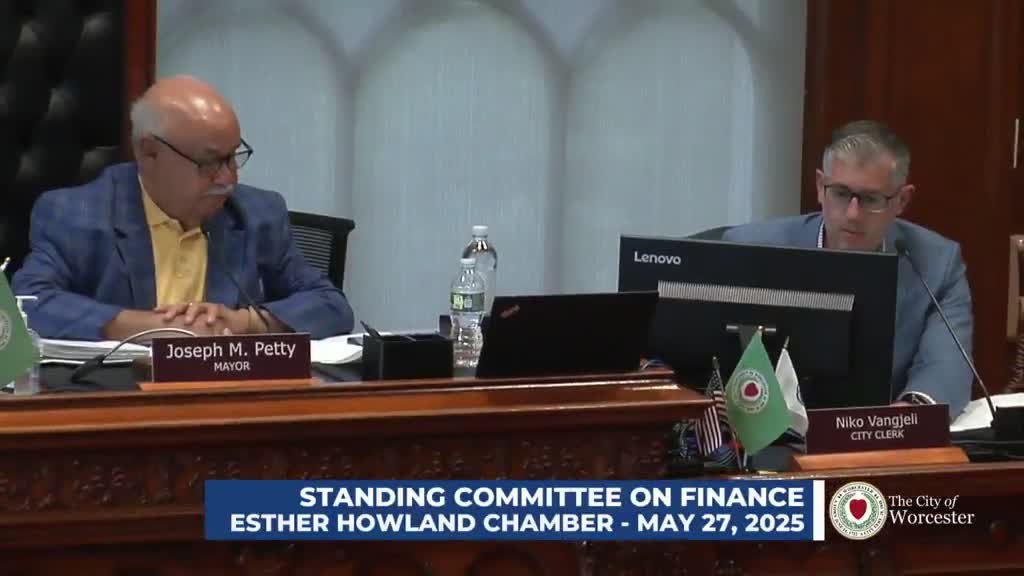
Fire chief tells finance committee apparatus delays, training and new investigator positions drive FY26 request
Summary
The Fire Department requested a $49.3 million FY26 appropriation (12% increase) covering two new lieutenant positions, added overtime, replacement of PFAS‑free gear and a plan to add two investigator‑trained positions to ensure an on‑duty investigator; officials warned of long apparatus build times.
WORCESTER, Mass. — Fire Chief Martin Dyer and his command staff told the finance committee on Tuesday the Worcester Fire Department’s recommended FY26 appropriation of about $49,300,000 reflects negotiated staffing changes, increased overtime and a transition to PFAS‑free turnout gear.
Chief Dyer said two new lieutenant positions were created by collective bargaining and that overtime has increased in recent years because of vacancy coverage, training and policy changes. The proposed capital borrowing includes $460,000 for station improvements and vehicle replacements.
The department also plans to add two investigators assigned to operations so a trained investigator is available on duty at all times. Chief Dyer said creating a sustained, on‑duty investigator capability requires training and planning; the department budgeted those positions to become operational in the second half of FY26.
Councilors raised long‑running concerns about the fire fleet. Chief Dyer and apparatus staff said manufacturers are facing long lead times and quality issues; the department reported current delivery estimates of roughly 660 days for ladder trucks and more than 1,000 days for some pumpers. The chief said the department manages the risk using spare apparatus but that the extended production timelines and increased repair needs are a national industry issue.
Fire leadership said they are emphasizing daily training, citing four annual specialty training programs and an internal push to make training a routine part of shift work; they also cited employee assistance/critical incident programs and a plan to augment peer support and EAP access.
Why it matters: The FY26 request funds immediate staffing and equipment needs in a department responsible for 24/7 emergency response. Long apparatus lead times and rising overtime present both operational and budget pressures.
What’s next: The finance committee advanced the appropriation; Dyer said the department will continue recruit classes and training while implementing the investigator positions and rolling out PFAS‑free gear.