Get Full Government Meeting Transcripts, Videos, & Alerts Forever!
Get email alerts on the Employee Health Plan topic
No spam. Unsubscribe anytime.
City of Naples health plan posts falling claims; no premium increase planned for 2025‑26
Summary
Human resources and benefits consultant reported the city's health plan performed better than regional benchmarks: claims fell about 2.4%, adherence and preventive care rates exceeded norms, and staff recommended no payroll deduction increase for the next fiscal year; a specialty prescription program was proposed to reduce costs further.
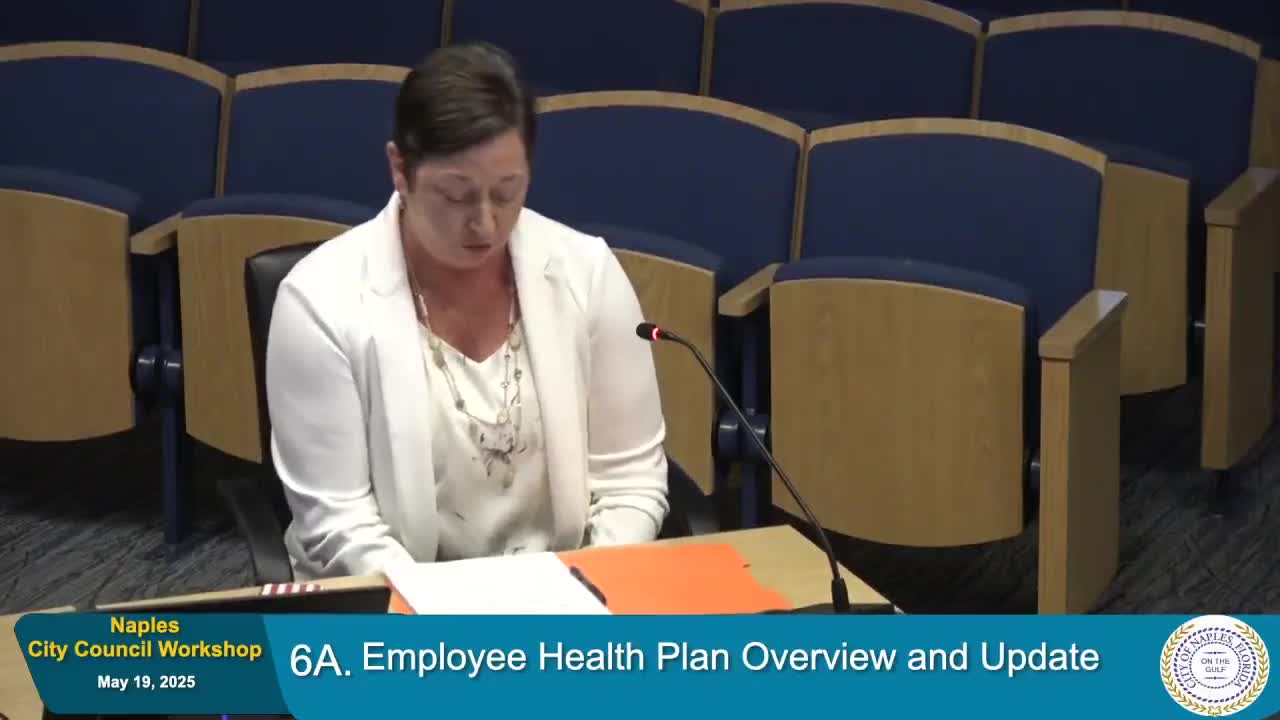
City human resources staff and the city’s benefits consultant told the City Council the municipal employee health plan ended the latest plan year with better‑than‑expected results and no recommended contribution increases for fiscal 2025‑26.
The presentation by Christian Bergstrom of the Gehring Group and Lori McCullers, deputy human resources director, showed the city’s covered population — roughly 973 lives (453 employees and 520 dependents) — produced overall medical and pharmacy claims that decreased by 2.4 percent in the most recent plan year. That outturn contrasted with an industry trend of about 9–10 percent in the region, the consultant said.
Why this matters: continued favorable claims performance reduces pressure to raise employer or employee premiums and helps contain the city’s operating costs. Staff recommended no change to payroll deductions for plan participants for the next plan year.
Key findings and recommendations (staff presentation): - Covered lives: about 973 total (453 employees, 520 dependents). - Claims trend: medical spend flat and pharmacy down about 10 percent; overall claims down 2.4 percent compared with regional increases in the industry. Catastrophic claim frequency and severity remain the most important drivers of cost (2% of population accounts for roughly half of total spend). - Preventive care and adherence: 69% of lives had a preventive service; hypertension and diabetes medication adherence rates were well above national peer benchmarks (hypertension ~85% adherence; diabetes ~92%). - Wellness incentives: staff recommended continuing the wellness incentive program and the health reimbursement account (HRA) contributions; employees will continue to be required to complete biometric screenings to secure incentive HRA funds. Staff proposed expanding targets and maintaining up to $750 in HRA funding for employees who meet multiple wellness targets. - Specialty drug program: staff proposed a new SaveOnSP program to reduce employee cost share for certain specialty medications while capturing manufacturer copay assistance and sharing net savings with the plan; consultant estimated net city savings of roughly $31,780 and employee out‑of‑pocket savings of $17,546 for an estimated 11 affected participants.
Nut graf: With strong adherence and preventive screening rates and a modest decrease in total claims, city staff said the plan is fiscally stable for the upcoming year without benefit design changes or contribution increases; staff recommended continued promotion of wellness and targeted specialty drug programs.
Next steps and council direction: council asked for more targeted outreach to spouses and dependents (many of the unengaged lives are dependents), and staff said they would begin mailings to home addresses to promote preventive services and cancer screening kits (Cologuard pilot had earlier produced solid uptake). Staff will bring updated plan communication strategies and finalize the specialty drug program implementation details for an October plan start.
Ending: Council commended HR and the consultant on the plan’s performance and instructed staff to proceed with the wellness and specialty drug initiatives while continuing to monitor catastrophic claim exposure.